Blue Peony
Blue peony is a perfumery fiction, a fragrant idea rather than a true scent molecule. What your nose reads as peony is a careful accord of rose, lilac, and green synthetics assembled by chemists.
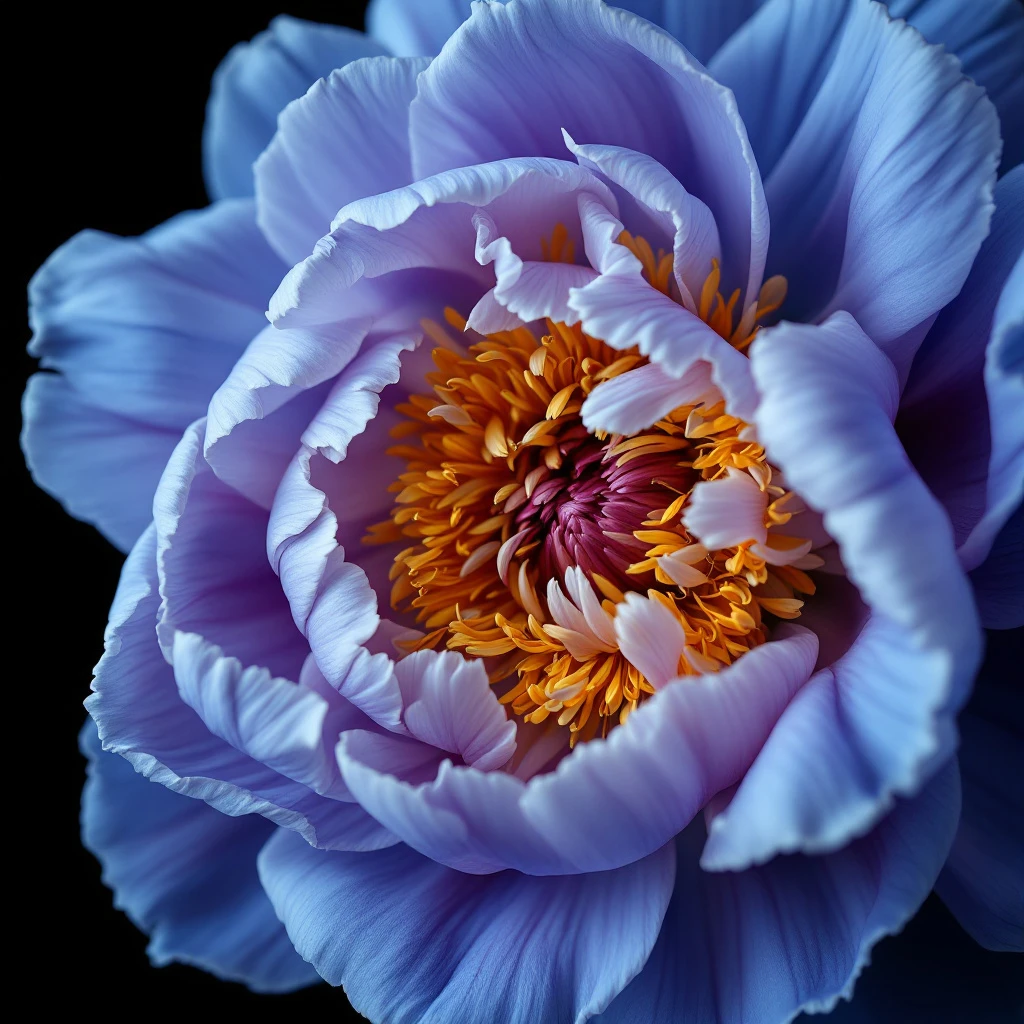
Character
How it smells
A flower's ghost, captured entirely in the lab
No living peony has ever yielded a single drop of usable perfume oil. Every peony note in existence is constructed without the flower itself.

Origin
China
Peony carries one of the longest cultural résumés in all of botany. Cultivated in China for more than 1,600 years, the flower holds the status of national emblem and anchors the famous Luoyang festivals in Henan province, where gardeners have bred thousands of ornamental varieties since the Tang dynasty. Traditional Chinese Medicine still prescribes peony root to ease night sweats and calm stomach ailments.
European botanists encountered the plant during the Jesuit missions of the 17th and 18th centuries, and by the Victorian era peonies were fixtures of estate gardens across Britain and France. Yet despite this deep horticultural history, the flower never entered the canon of natural perfumery materials. Rose, jasmine, tuberose, and lavender all surrender their oils.
Peony does not. When mid-20th-century aroma chemistry opened doors to building flowers from molecules, peony became one of the first blooms perfumers tried to reconstruct. The 1976 synthesis of peonile gave the note a stable chemical backbone, and today peony is a staple of mainstream launches because it costs a fraction of true rose and appeals to a modern appetite for soft, clean florals.
Wears it best
Fragrances featuring Blue Peony
Brands
Brands known for Blue Peony
Good to know
Questions, answered
The essentials on Blue Peony in perfumery: how it smells, where it comes from, and how it behaves on skin.
What does blue peony actually smell like?
Blue peony reads as a fresh, watery rose with soft green edges and a faint cucumber coolness. It has no animalic or honeyed depth, sitting in the bright, sheer register of modern florals rather than the heavy, indolic territory of jasmine or tuberose.
Is blue peony a natural essential oil?
No. Genuine peony yields no usable perfume extract through steam distillation, solvent extraction, or any other standard method. Every blue peony note in commercial fragrance is a synthetic accord built from aroma chemicals, most often including the molecule peonile.
What chemical is used to create peony in perfumery?
The principal molecule is peonile, synthesized in 1976 by chemist Jean-Pierre Bachmann. It supplies a rosy, dewy character and is typically layered with phenylethyl alcohol and green synthetics to deepen the floral illusion.
Where did peony cultivation begin?
China's Luoyang region in Henan province holds the oldest documented peony cultivation, with records stretching back more than 1,600 years. The city still hosts annual peony festivals each spring, drawing visitors to see hundreds of ornamental varieties.
Why can't perfumers extract real peony oil?
Peony petals contain extremely low concentrations of volatile oils and break down during conventional extraction. The yield is so low that commercial production is economically and technically impractical, which drove perfumers to synthetic reconstruction instead.
Is blue peony safe for sensitive skin?
Like most synthetic florals, formulated blue peony accords are generally well tolerated in finished fragrances at regulated usage levels. Individual sensitivity varies, so testing a small amount on skin before regular wear is always wise.
How is blue peony different from rose?
Rose offers a deeper, honeyed, almost jam-like sweetness with citrus and spice facets. Blue peony is brighter, greener, and more transparent, with a watery lift that rose lacks, which makes it feel lighter and more modern in casual compositions.
Which fragrances are known for prominent blue peony notes?
Blue peony appears widely in mainstream designer launches of the 2000s and 2010s, particularly in light floral and fresh-acqua style scents where it stands in for rose at a lower cost. Specific formulation details vary house to house.




