Baking Spices
The warm, enveloping cluster of spices that evokes ovens, markets, and kitchens across centuries. From Ceylon cinnamon to Indonesian clove, these aromatic botanicals bridge the edible and the exquisite.
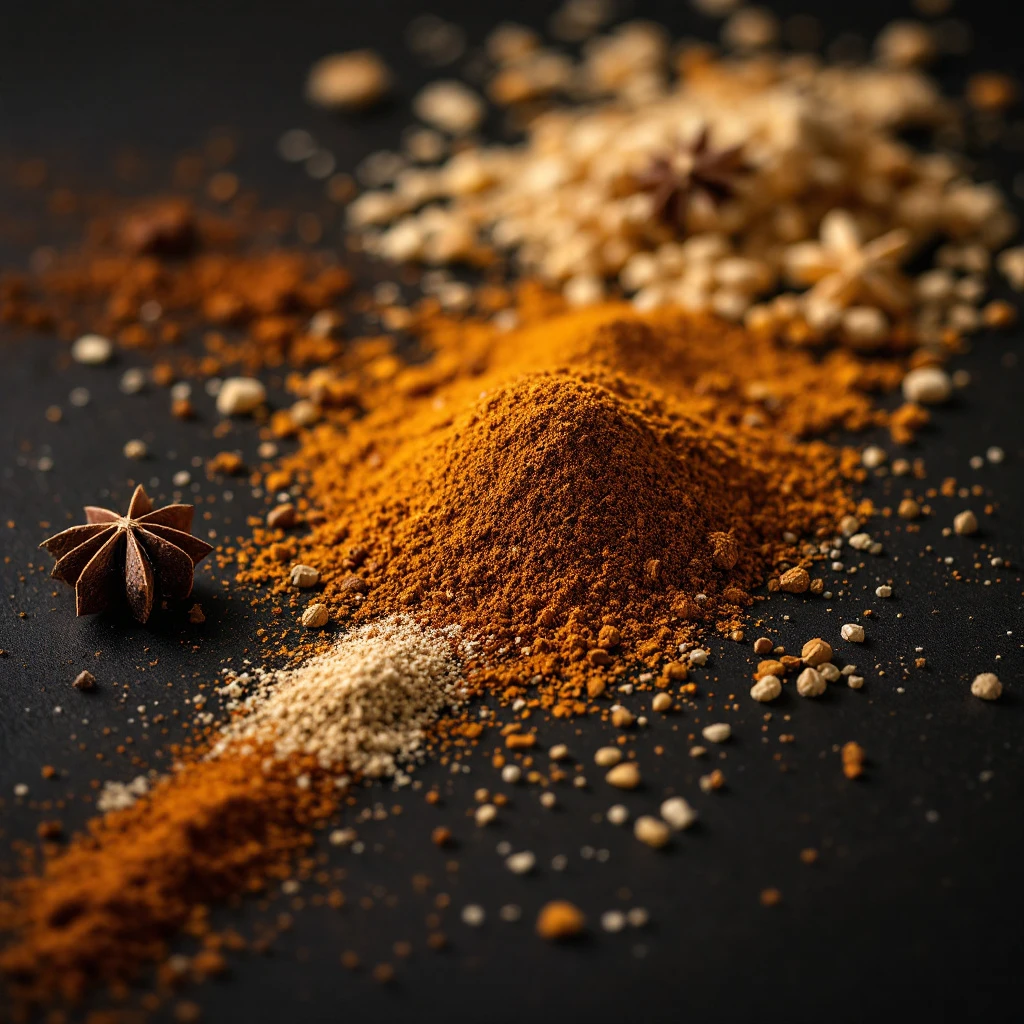
Character
How it smells
Earth's oldest kitchen-to-perfume ingredients.
Ancient Egyptians imported cinnamon bark specifically for ceremonial unguents, some of which survived in sealed tombs for over 3,000 years.



Origin
Sri Lanka
The spice trade shaped civilizations before written history began. Ancient Egyptians sourced cinnamon from East Africa and Arabia via complex overland routes, using it in sacred unguents and temple rituals. Phoenician traders profited handsomely moving these resins westward.
By the 12th century, Arab physicians practicing in Damascus and Baghdad had refined distillation techniques that extracted purer aromatic compounds from cinnamon bark, clove buds, and dried ginger roots. When Portuguese explorers reached Ceylon in 1505, they disrupted millennia of Arab spice monopolies, triggering colonial competition that rewrote world maps. European apothecaries prized these warming materials for both remedies and early toilet waters, recognizing their antimicrobial properties alongside their sensory appeal.
Modern perfumers continue this lineage, using these same botanicals to anchor warm, oriental, and gourmand fragrance families with an authenticity no synthetic can fully replicate.
Wears it best
Fragrances featuring Baking Spices
Brands
Brands known for Baking Spices
Good to know
Questions, answered
The essentials on Baking Spices in perfumery: how it smells, where it comes from, and how it behaves on skin.
What exactly are baking spices in perfumery?
Baking spices are aromatic botanicals primarily used in food that also appear in fragrance. Common examples include cinnamon bark, clove buds, nutmeg, cardamom, ginger, and allspice. They contribute warm, sweet, and sometimes sharp notes to perfume compositions.
How do perfumers extract fragrance from baking spices?
Steam distillation is the most common method. Cinnamon bark and clove buds yield essential oils this way. Some perfumers use CO2 or solvent extraction for delicate materials like cardamom, which preserves more of the original aromatic complexity.
When did baking spices first enter perfumery?
Egyptian tomb paintings from 1500 BC depict cinnamon among imported luxury goods used in scented unguents. The ancient Egyptians were storing fragrant fats with spices by at least 3000 BC, predating modern distillation by millennia.
Are natural and synthetic baking spice notes the same in perfume?
Natural extracts contain hundreds of aromatic compounds; synthetics typically isolate one or two key molecules like cinnamaldehyde or eugenol. Natural materials offer complexity and subtlety that synthetics approximate but rarely match fully.
Which fragrance families use baking spices most?
Oriental, gourmand, and spicy fragrance families rely heavily on baking spices. Warm oriental compositions use them as heart or base notes, while gourmand perfumes build entire structures around their edible associations.
What role do baking spices play in fragrance formulation?
They function as fixatives and heart notes. Their aromatic density helps slower-evolving base notes project while adding warmth and psychological comfort. In combination with vanilla or resins, they create unmistakably cozy dry-downs.
Which baking spice is most prevalent in perfume?
Cinnamon appears most frequently, followed by clove and nutmeg. Cinnamon bark oil ranks among the top 30 most-used perfume ingredients globally, valued for its immediate warmth and strong sillage contribution.
Do baking spices smell different across perfume concentrations?
Yes. In cologne they read as bright and spicy. At perfume concentration, baking spices develop a rich, almost edible warmth that lingers as a skin-specific dry-down for hours. The concentration dramatically affects perceived sweetness and sharpness.





