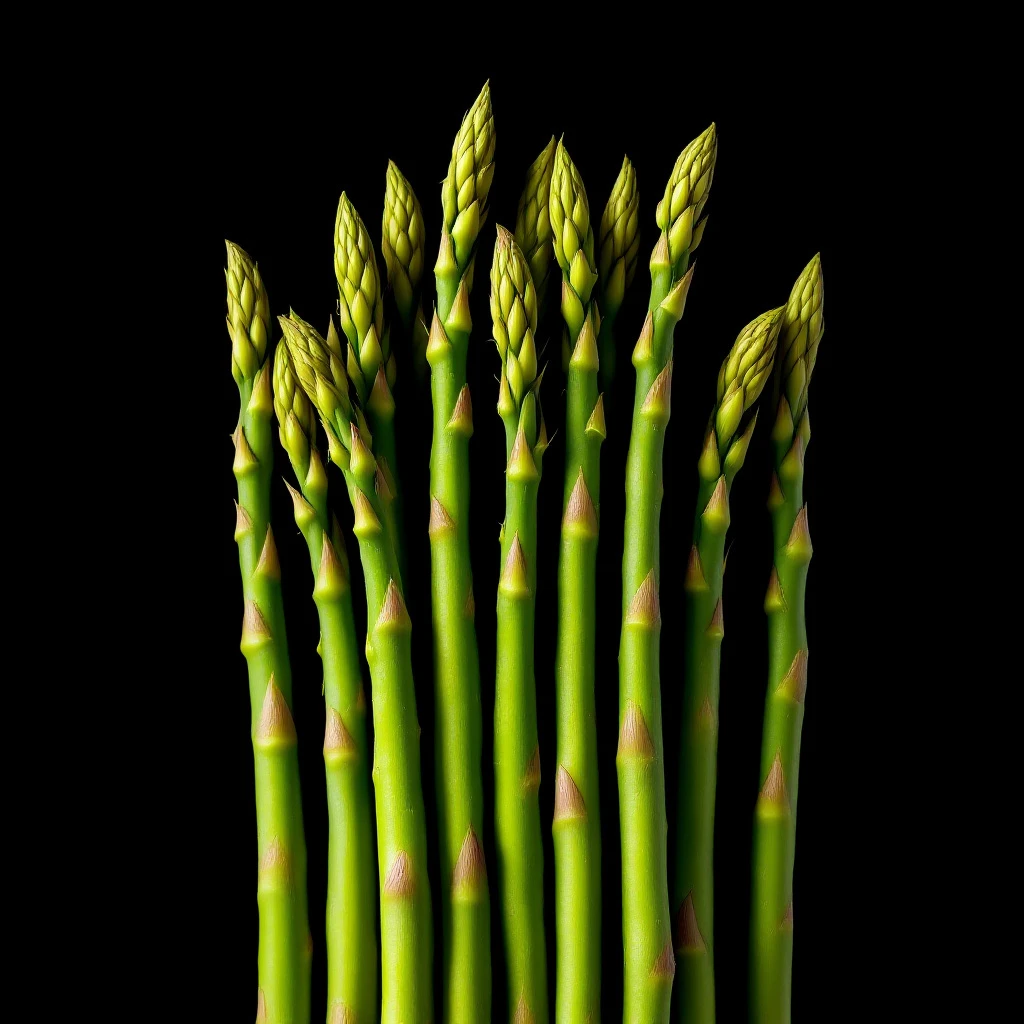
Asparagus
A rare green note that captures the essence of fresh-cut asparagus, bringing an unexpected vegetable freshness to fragrance compositions that challenge convention.
Character
How it smells
The unconventional green note that defies expectations.
About 40% of people carry a genetic mutation that makes them completely unable to detect the characteristic aroma of asparagus.




Origin
Mediterranean region
Asparagus has been gathered from the wild since ancient Mediterranean civilizations, with evidence of cultivation dating to Greek and Roman periods over 2,500 years ago. The vegetable held culinary prestige throughout antiquity, prized by emperors and commoners alike. Its journey into perfumery represents a distinctly modern phenomenon, emerging from a late 20th-century shift toward unconventional natural notes.
Where traditional perfumery relied on established botanical ingredients, contemporary creators began exploring vegetable-derived aromas as part of a broader movement toward naturalistic fragrances. This unconventional ingredient reflects a generation of perfumers willing to challenge conventions and find beauty in unexpected places.
Wears it best
Fragrances featuring Asparagus
Brands
Brands known for Asparagus
Good to know
Questions, answered
The essentials on Asparagus in perfumery: how it smells, where it comes from, and how it behaves on skin.
What does asparagus smell like in perfume?
Asparagus in perfume presents as a fresh, green vegetable note with subtle sulfurous undertones. The scent evokes freshly cut stalks with a clean, watery quality. Most people find it adds an unusual organic freshness that reads as distinctly green without being grassy.
Is asparagus commonly used in perfumery?
Asparagus is exceptionally rare in fragrance formulations. Most perfumers avoid it due to its challenging profile, though a handful of niche houses have incorporated it as a supporting green note in compositions emphasizing unconventional natural character.
What other notes pair well with asparagus?
The note works alongside fresh aromatics like galbanum, tomato leaf, and cress. It also complements aquatic florals and crisp green chypre structures where its vegetable character adds unexpected dimension beneath more traditional heart notes.
Why would a perfumer use asparagus?
Perfumers turn to asparagus when seeking to create fragrances with unconventional freshness that break from typical citrus or marine conventions. The note adds genuine organic authenticity and a vegetable-like quality rarely found in perfumery, serving compositions that celebrate nature's less glamorous offerings.
Is asparagus natural or synthetic in perfume?
Both forms exist, though synthetic and nature-identical versions predominate. Asparagus absolute extracted from the vegetable is prohibitively rare and expensive. Headspace technology has enabled more authentic capture of asparagus character while maintaining practical concentrations in formulations.
What perfumes contain asparagus?
Few mainstream fragrances list asparagus, but select niche compositions from houses exploring unusual natural extracts have featured it. These tend toward conceptual fragrances emphasizing their botanical sources or unusual vegetable origins.
How does asparagus contribute to green fragrances?
The note brings a distinctly vegetable dimension that differentiates green fragrances from those relying solely on floral or leafy accords. It introduces an organic freshness suggesting the actual produce section of a market rather than crushed leaves or cut grass.
What aroma compounds define asparagus character?
Sulfur-containing molecules, particularly 2-methoxy-2-thiapropane, create asparagus signature. These compounds exist in extremely low concentrations in nature but prove extraordinarily potent. Synthesized derivatives allow perfumers to incorporate asparagus-like qualities at practical use levels.