Asian Jasmine
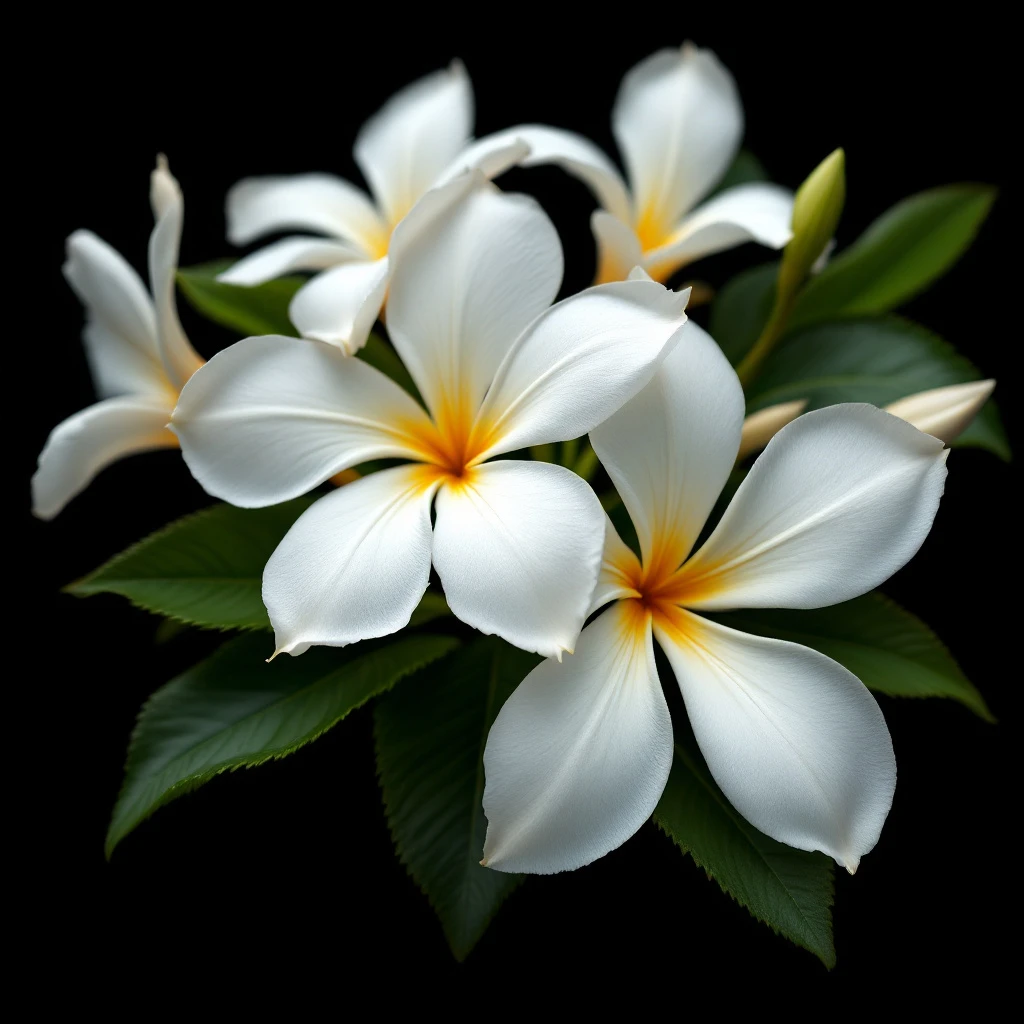
Asian Jasmine (Jasminum sambac) delivers a rich, intensely floral aroma with hints of fruity brightness and a sensual depth that forms the heart of countless legendary fragrances. This ancient bloom carries centuries of perfumery tradition in every petal.
Character
How it smells
The ancient heart of floral perfumery.
A single kilogram of jasmine absolute requires roughly one million hand-picked blossoms to produce.




Origin
India
Jasmine sambac traces its roots to South and Southeast Asia, where humans first cultivated it roughly 2,000 years ago in Persia. Ancient cultures in India and China held the flower in deep reverence, weaving it into religious ceremonies, cosmetics, and traditional medicine. The fragrance remained a treasured secret of Asian courts for centuries.
In the 1600s, the Moors of Northern Africa introduced jasmine to Spain, and the bloom spread rapidly across Europe to Italy and France. Grasse, France eventually became the heart of European jasmine cultivation, where local harvesters developed the painstaking hand-picking traditions still honored today. India and Egypt emerged as the world's leading producers, while Morocco, Italy, and France contribute smaller but highly prized harvests.
Among the more than 200 jasmine varieties, Jasminum sambac remains the species most closely associated with Asian jasmine traditions and continues to anchor the floral heart of modern perfumery.
Wears it best
Fragrances featuring Asian Jasmine
Brands
Brands known for Asian Jasmine
Good to know
Questions, answered
The essentials on Asian Jasmine in perfumery: how it smells, where it comes from, and how it behaves on skin.
What is Asian Jasmine in perfumery?
Asian Jasmine refers primarily to Jasminum sambac, a species native to South and Southeast Asia. Its absolute delivers an intensely floral, slightly indolic aroma with fruity undertones that perfumers value as a rich heart note in fine fragrances.
Where does jasmine absolute originate?
India and Egypt are the world's leading producers of jasmine for perfumery. Morocco, Italy, and France contribute smaller but historically significant harvests, with Grasse, France maintaining a small but prestigious cultivation.
How is jasmine absolute extracted?
Solvent extraction is the dominant modern method. Freshly harvested flowers are washed in a solvent to produce jasmine concrete, which is then processed into absolute. Small-scale operations still use traditional enfleurage, a cold-fat method.
What does Asian Jasmine smell like?
Jasmine sambac absolute reads as intensely floral with a warm, slightly animalic indolic base and fruity accents. It is rounder and more sensuous than some other jasmine varieties, lending depth and erotic warmth to fragrance compositions.
What is the history of jasmine in perfumery?
Humans first cultivated jasmine around 2,000 years ago in Persia. It spread to India and China, where it held cultural and religious significance. The Moors introduced it to Spain in the 1600s, and it reached France and Italy shortly after.
Why is jasmine so expensive?
Jasmine harvesting requires hand-picking in pre-dawn hours to preserve fragrance. A single kilogram of absolute demands roughly one million blossoms. The flowers must reach processing facilities within hours of harvest, making labor the dominant cost driver.
How is jasmine used in fragrance?
Perfumers use jasmine absolute as a floral heart note that adds richness, warmth, and sensuality. It blends well with rose, sandalwood, bergamot, and amber, appearing in roughly 80 percent of modern fine fragrances across all fragrance families.
What is the difference between jasmine sambac and common jasmine?
Jasminum sambac (Asian or Indian jasmine) offers a rounder, more indolic scent profile with fruity nuances. Jasminum officinale (common jasmine) reads as lighter, greener, and more delicate. Both are used in perfumery but contribute distinct aromatic characters.




