


The Story
Why it exists.
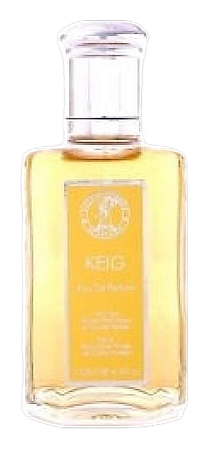
Keig takes its name from a village in Aberdeenshire, Scotland, a small acknowledgment that this fragrance belongs to the landscape. Andrew French built Keig as a citrus fragrance that refuses to behave like one. The challenge: create something bright and essential that lasts. Not a fleeting morning sketch, but a scent with actual permanence. The solution lives in the base, sandalwood and cedarwood anchoring the citrus so it doesn't simply vanish. Amber and musk finish the composition, giving Keig its rare quality: a citrus that lingers.
If this were a song
Community picks
Pink Moon
Nick Drake
The Beginning
Keig takes its name from a village in Aberdeenshire, Scotland, a small acknowledgment that this fragrance belongs to the landscape. Andrew French built Keig as a citrus fragrance that refuses to behave like one. The challenge: create something bright and essential that lasts. Not a fleeting morning sketch, but a scent with actual permanence. The solution lives in the base, sandalwood and cedarwood anchoring the citrus so it doesn't simply vanish. Amber and musk finish the composition, giving Keig its rare quality: a citrus that lingers.
Most citrus fragrances offer an hour, maybe ninety minutes. Then they disappear, leaving you wondering if you sprayed anything at all. Keig was designed to challenge that expectation. The essential oils, bergamot, lemon, lime, provide the bright, sharp opening. But the sandalwood and cedarwood base holds everything together, extending the scent well beyond what the category typically allows. The ambergris and musk keep it close to the skin, intimate rather than announced. This is the unusual part: a citrus that actually stays.
The Evolution
The opening arrives crisp and immediate. Bergamot, lemon, and lime, three citrus oils hitting at once, sharp and clean. No hesitation. For the first hour, the citrus dominates: bright, essential, almost astringent in its clarity. Then the hand-off begins. The lemon and lime recede while cedarwood slowly emerges from underneath, taking up space the way a bass note enters a song, not announcing itself, just arriving. By hour two, sandalwood joins. Together the woods create a warmth that softens everything that came before. The drydown is quiet. Ambergris and musk settle close to the skin, intimate rather than projecting. Six to eight hours on most people. The citrus fades, but the woods remain, clean, warm, present long after the bergamot has gone.
Cultural Impact
Keig occupies a specific corner of the market: the man who wants quality without announcement. Castle Forbes positions these scents as alternatives to mass-market offerings, not through branding noise, but through ingredient transparency and a hands-on laboratory approach. Keig's unusual longevity for a citrus fragrance sets it apart in a category where most compositions evaporate within the first hour.
The House
Scotland · Est. 1996
Castle Forbes is a niche fragrance house rooted in the historic Castle Forbes estate in Aberdeenshire, Scotland. Founded in 1996 within a former dairy building, the brand creates small‑batch scents that echo the quiet elegance of the Scottish countryside. Its portfolio includes Lonach, Vetiver, Eau Deux, S'Eau Fresh, Sandalwood (2018), S'Eau Rose, Chatelaine (1996), Applause, Neroli and the limited‑edition 1445. Each fragrance is formulated in a modest laboratory that still bears the original dairy’s stone walls, allowing the house to maintain a hands‑on approach to scent creation while honoring a tradition of understated craftsmanship.
If this were a song
Community picks
Bright and clean, like the moment morning light breaks over the coast. Lemon zest in the air, warm sandalwood settling close. This is the sound of a Scottish morning, not dramatic, just clear. The kind of playlist that starts with acoustic guitar and ends somewhere warm.
Pink Moon
Nick Drake