The Story
Why it exists.
The beginning
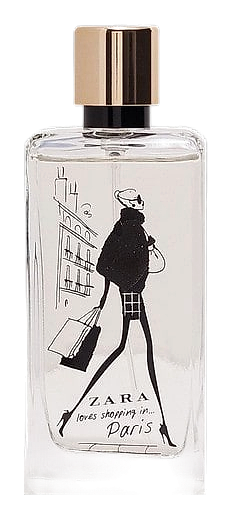
Zara released this fragrance in 2015 as a love letter to Paris, the city, the shops, the specific thrill of finding something perfect and walking out with a bag you didn't plan on carrying. The name says it all. No subtlety. Just that rush. It sits within Zara's broader fragrance range as a fruity-floral with an oriental base, built for people who want immediate impact and a scent that smells like a treat.
What makes this composition interesting is the way it handles sweetness. The cherry and lychee top doesn't arrive politely, it bursts, almost confectionery in its brightness, with a coolness underneath that keeps it from cloying. The heart of jasmine, violet, and freesia is present but restrained, more of a softening than a full floral statement. The real story is the praline, cedar, and patchouli base, which rounds the whole thing into something warm and moreish rather than linear and flat.
The evolution
The opening hits quickly, bright cherry and lychee, almost syrupy in their sweetness, with a cool watery lift that keeps it feeling fresh rather than heavy. Raspberry adds a slight tartness underneath, a counterweight to the confectionery edge. Within 20 minutes, the florals begin to emerge, not dominating, but threading through, violet and freesia softening the initial sweetness into something more rounded. The jasmine takes longer to show itself, arriving quietly around the 40-minute mark as a warm, creamy undertone rather than a heady floral statement. The drydown is where this fragrance earns its keep. Praline becomes more prominent, wrapping around cedar and patchouli in a way that smells like the inside of a leather bag, warm, nutty, intimate. It stays close to the skin, projecting softly but lasting well into the evening. That transition from bold opening to warm, close-finish is what separates this from simpler sweet fragrances.
Cultural impact
Zara's 2015 entry into the fragrance market marked a shift in accessible luxury. The fashion brand leveraged its existing retail infrastructure to offer perfumes as impulse accessories rather than luxury investments. The Paris-angled branding captured the era's obsession with city-inspired naming, part of a broader trend that saw designer houses and high-street brands alike tapping into aspirational geography. By pricing aggressively and placing bottles near checkout counters, Zara treated fragrance like fast fashion: disposable, trend-aware, and easy to adopt. The move also blurred lines between designer and mass-market, making chicly-named scents a democratic pleasure rather than a splurge.