The Story
Why it exists.
The beginning
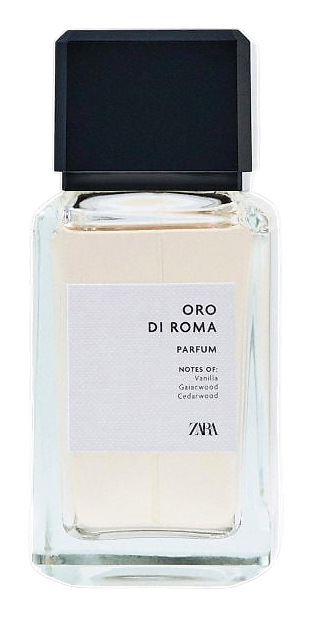
Oro di Roma arrived in 2026 as Zara's take on Roman warmth. The official line calls it a modern interpretation of Roman luxury: warm, luminous, and deeply addictive. That's a generous framing for a Zara release, but the scent earns some of the swagger. The composition leans into a golden profile, built around saffron, honey, vanilla, cedarwood, and guaiac wood. The saffron cuts through the opening with a leathery, almost metallic edge, then softens as the woods arrive. What follows is a slow incline from dry spice into something sweeter and more resinous, the honey arriving with a golden glow rather than any cloying weight. The vanilla base grounds everything, turning the wood-and-saffron structure into something that reads more like sunlit amber than sweet dessert.
Oro di Roma skips heavy incense territory and goes for a different kind of warmth: wood, honey, and vanilla grounded by saffron. The accord structure reads ambery-woody according to Zara, which is honest marketing shorthand for a scent that wants to feel opulent without tipping into anything overly smoky or church-like. The saffron note appears in both the top and heart notes of the official breakdown, giving it structural presence throughout the opening act.
The evolution
The opening is dominated by saffron, sharp and almost metallic against bare skin. Then the cedarwood arrives, and the temperature drops a few degrees into something drier, more architectural. The honey shows up gradually, tipping the whole composition golden as the cedar recedes into the background. The vanilla doesn't rush in; it settles underneath everything else, turning what was a spiced-woody opening into something resembling warm amber resin on skin. The drydown is almost entirely vanilla and cedarwood, with the saffron still flickering faintly underneath like a pilot light. By the late hours, what's left is a skin-scent close to the body: sweet wood, faint spice, a trace of honey. It doesn't project much past arm's length after the first several hours, but it stays noticeable on fabric and in hair into the next morning.
Cultural impact
Oro di Roma sits in the crowded ambery-woody vanilla category, a space crowded with options at every price tier. Where it earns attention is in how it handles its core accord: the saffron opening gives it a distinctive edge that distinguishes it from softer vanillas in the same family. The composition balances sweetness and structure with notable precision, avoiding the pitfalls of either cloying gourmand territory or austere woodiness. The honey note reads as waxy and textured rather than sugary, and the vanilla leans woody rather than creamy, giving the whole thing a more resinous character.