
The Story
Why it exists.
The beginning
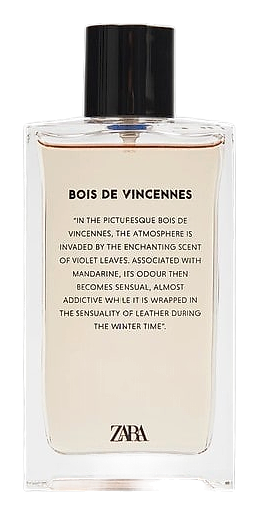
Bois de Vincennes arrived in 2020, part of Zara's approach to scent that pulls a sense of place into a bottle. The composition was created by perfumer Emilie Bevierre-Coppermann. The name itself points east of Paris, to the Bois de Vincennes, and the collection it belongs to reads like a set of postcards from the city's less-trafficked corners. That juxtaposition, wild green against cultivated calm, threads through the juice itself. The opening has the snap of something freshly cut, violet leaf and mandarin holding that bright, almost bitter-green edge that makes the first few minutes feel like stepping out of a warm room into cold air.
What makes this composition interesting is the balance it strikes between sharp green and tactile warmth. Violet leaf and mandarin form an opening that could easily tip into straightforward freshness, but the leather accord pulls the scent somewhere more considered. That leather reads as something substantial, not the soft suede of a glove or the heavy saddle-leather of a classic masculine. It has a grain to it, a dryness that suggests material rather than animal.
The evolution
The first 15 minutes belong to violet leaf and mandarin, and they arrive with a certain crispness. Green, slightly metallic, with a citrus edge that doesn't shout so much as lean in. Then the leather steps forward, around the 30-minute mark, and the scent shifts character. It becomes warmer, denser, a little smoky. The iris weaves through, keeping the composition from tipping into pure animal territory. By the two-hour mark, the cedar has established itself, and the leather has softened from something sharp to something lived-in. Amber and musk take over the base by hour four or five, leaving a warm, slightly sweet trail that sits close to the skin. The final hours read mostly amber and clean musk, like the last trace of smoke in an empty room. The next morning, on fabric, a faint woody sweetness remains.
Cultural impact
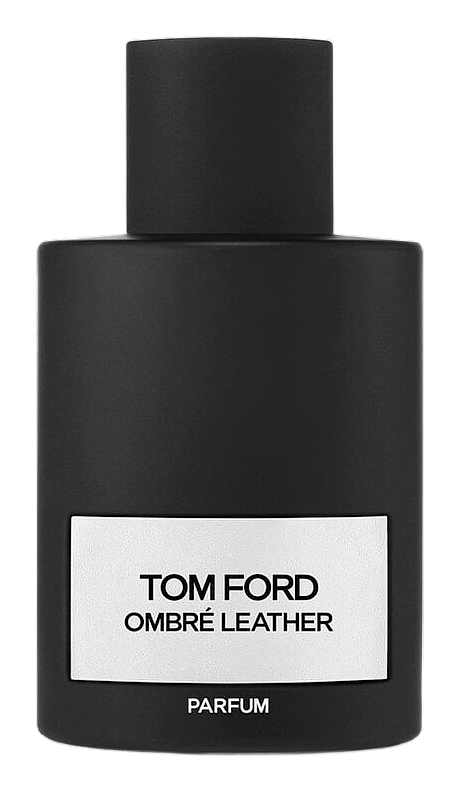
Worth noting: Bois de Vincennes shares DNA with a number of well-known leather compositions. Tom Ford's Ombré Leather (2018) and Le Labo's AnOther 13 are both frequently cited as reference points by wearers, though Bois de Vincennes comes in at a fraction of the price. The fragrance earns comparisons not because it imitates either of those references outright but because it works in the same tonal territory, that intersection of green freshness and tactile material that has become a recognizable space in modern scent.