The Story
Why it exists.
The beginning
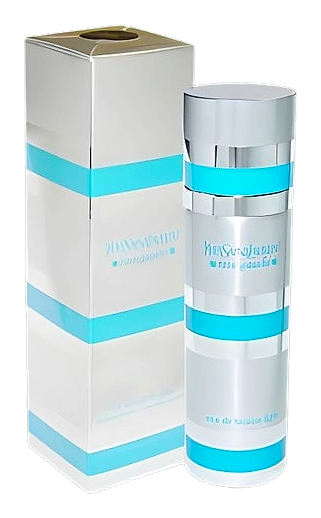
Rive Gauche arrived in 1970 as a declaration: the left bank was free, and so were the women wearing it. Packaged in a radical metal canister, it embodied the Paris that made and unmade artists, writers, and anyone bold enough to live without apology. By 2004, perfumer Daniela Andrier returned to that name with a different mission, not to replicate the original's aldehydic intensity, but to carry its spirit into something softer, more wearable, more willing to be loved than feared. Rive Gauche Light is the flanker that didn't want to be a statement. It wanted to be a second skin.
What makes this composition unusual is how it handles the aldehydes. Instead of the champagne-bubble lift that defined the 1970 original, these aldehydes behave differently, smoother, less effervescent, almost integrated into the powder rather than cutting through it. The result is a fragrance that opens clean but doesn't stay cool. The florals, freesia, jasmine, rose, build slowly into something that feels less like a top note and more like a mood. Vetiver in the base keeps everything grounded without going sharp. It's a lesson in restraint: what you don't use matters as much as what you do.
The evolution
The opening arrives quick, a brief flash of citrus, the aldehydes shimmering for ten or fifteen minutes before they soften into the florals. Freesia takes over first, then jasmine. The rose is there throughout but it never dominates. By the second hour, the composition has settled into something powdery and warm, vetiver and musk doing the quiet structural work. On fabric, it lasts longer than on skin, a full workday if you're lucky, though it stays intimate rather than announcing itself. By evening, it reads as a memory of itself: soft, skin-close, the kind of thing someone might notice when they're already standing close enough to talk.
Cultural impact
Rive Gauche Light occupies an unusual position as a discontinued flanker, sought by collectors of the 1970 original but approachable enough for newcomers who find the classic aldehydic intensity too much. The 2004 release represents an attempt to soften the house's signature boldness into something more wearable without losing its character entirely.