
The Story
Why it exists.
The beginning
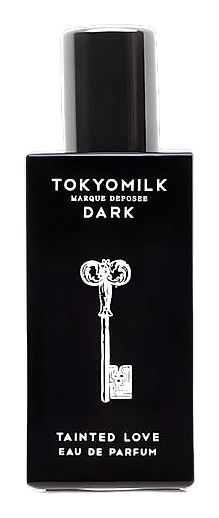
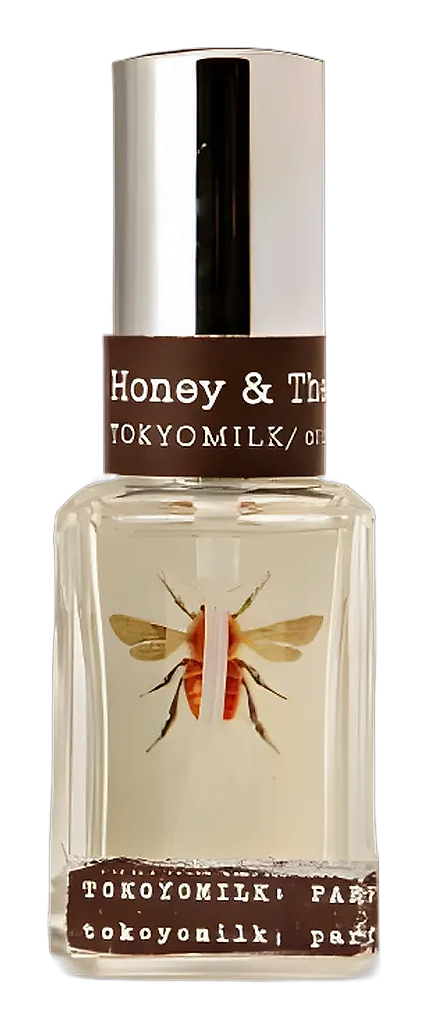
Margot Elena designed Honey and the Moon in 2003 for Tokyo Milk Parfumerie Curiosite, her American fragrance house that treats perfume as storytelling. The name carries that old-world romanticism the brand loves: honey as devotion, the moon as witness. Neither literal nor subtle. The vision was a honey that didn't get gormandized into candy, something that smelled like the real thing, still warm from the comb, then softened by night air and violet petals. Sandalwood and jasmine hold it close to the skin instead of throwing it across a room. Built to linger rather than announce. This is fragrance as quiet gesture, not performance.
What makes Honey and the Moon interesting is the restraint inside the sweetness. Honey as a note is notoriously loud, it can take over a composition entirely if the perfumer isn't careful. Here, violet and jasmine exist alongside it as counterweights, keeping the honey answerable to something softer. Sandalwood anchors the whole thing so it doesn't float off into pure sweetness. The sugar accord is implied more than explicit, you feel it in the way the floral notes read slightly confectionery, but not in a cheap way. More like the sugar on the rim of a glass you've forgotten. That slight effervescence underneath the creaminess is where the composition earns its complexity. It coats without cloying.
The evolution
Honey announces itself first, golden, slightly animal, not at all synthetic. It doesn't shout. It settles into the crook of the wrist like it belongs there. Within the first ten minutes, the jasmine arrives soft and creamy, not indolic, just present enough to remind you this is a floral composition with a sweet tooth. The heart is where things get intimate. Violet reads as sugared and slightly powdery without tipping into vintage grandma territory, more like the dust on a book cover in a warm library. Sandalwood is the undercurrent the whole time, never loud, just warm wood that keeps everything skin-close. By the second hour, the topnotes fade and what remains is a warm, slightly sweet, slightly powdery impression that stays close to the body for another few hours. On fabric, the honey persists, a faint golden warmth that outlasts the violet. On some skin, the violet amplifies slightly. Either way, the drydown stays soft. Moderate sillage means you'll only smell it if you're close. Which, if you're wearing it, means someone is choosing to be close to you.
Cultural impact
Honey and the Moon sits quietly in the Tokyo Milk catalog, not the brand's loudest release, but one of its most wearable. The honey-forward oriental approach has always had fans, but this one avoids the heavy, resiny sweetness that can make oriental fragrances tiring. Instead, it reads cozy and intimate, the kind of scent people describe as appropriate without meaning boring. The 2003 launch date places it early in the indie fragrance wave, before honey became a mainstream note trend. It holds up.