
The Story
Why it exists.
The beginning
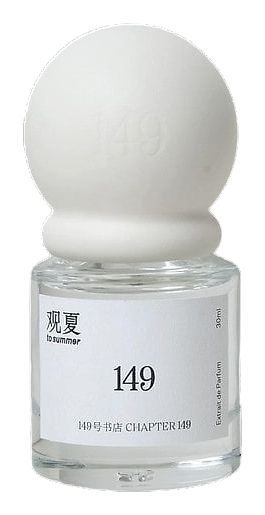
149号书店 is named for a Shanghai literary address, one that became shorthand for the women writers who shaped the city's 1930s cultural landscape. To Summer's Eastern Literature collection draws from such specific coordinates, real places, real histories, and translates them into scent rather than story. This chapter is about a particular kind of elegance: the quiet confidence of someone who doesn't need a room to know they've entered it. Perfumer Alexander Lee worked with that tension from the start, how to build something intellectual without becoming cold, something warm without becoming obvious.
The composition reflects that balance. Blackcurrant and mandarin open contemporary and immediate, a present-tense brightness that doesn't signal nostalgia. The heart is where the story lives: iris, that powdery-violet material that carries the memory of ink and old paper, supported by jasmine and violet. They don't shout. They accumulate. The base, sandalwood, suede, ambrette, grounds the whole thing in something worn and personal, as though the fragrance has been on your skin for years rather than hours.
The evolution
The opening is bright. Blackcurrant and mandarin arrive first, with saffron threading warmth underneath like a bookmark tucked between pages. Within minutes the iris takes over. It pushes the fruit aside, settles in, and the whole thing shifts from fresh to powdery, that slight medicinal quality that iris carries, the violet dust of something printed on uncoated stock. The jasmine does not compete. It softens the edges, keeps the heart from becoming clinical. Then the suede arrives. Not leather, suede. Worn, warm, close. Sandalwood follows, and the ambrette adds a quiet musk that lingers. The drydown is intimate by design. It does not fill a room. It stays with you. On most skin the wear is moderate through the first hour, then settling close as the day progresses.
Cultural impact
To Summer occupies a specific position in the niche fragrance landscape: Chinese heritage presented without apology or translation, competing directly with established Western houses on composition rather than novelty. The Eastern Literature collection, of which Chapter 149 is a part, signals a shift toward cultural depth as the brand's primary differentiator. The 2024 launch reflects a broader moment in fragrance culture where Eastern narratives are no longer a trend but an established vocabulary.