
The Story
Why it exists.
The beginning
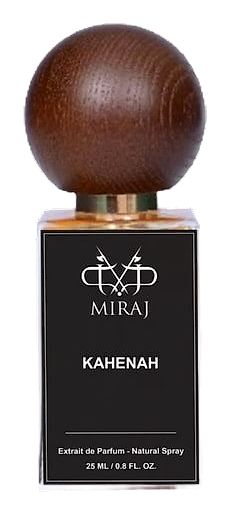
Kahenah takes its name from a legendary warrior queen of North Africa, a ruler whose name carried weight across the Maghreb. The House of Miraj, the Moroccan fragrance house founded by Abderrahim Larhrissi, approached her story the way a perfumer approaches a portrait: looking for the essential, not the literal. What emerged from that inquiry, in collaboration with Rajesh Balkrishnan, is a 2024 fragrance built on contrasts. Smoke and rose. Strength and softness. A scent that refuses to choose sides. Unisex in spirit, Moroccan in sensibility, Kahenah translates ancient female authority into something you can wear.
The smoke-and-rose pairing isn't common in Western perfumery, but it's well-worn across North African and Middle Eastern traditions, think of Moroccan hammams where rose water mingles with burning oud. What makes Kahenah different is the execution. The incense opens bright and clean. The citrus fades fast. The rose arrives darker than expected, almost medicinal in its depth. And the smoke, the smoke doesn't disappear. It deepens. Becomes the foundation everything else grows from. The amber amplifies rather than sweetens. The musk provides the quiet finish. Smoke and rose dominate the structure, but they feel inevitable together.
The evolution
The incense arrives first, clean and resinous, cutting through like morning light. Within minutes, the citruses fade and the rose emerges, not the velvety Damask rose of mainstream perfumery but something rawer, earthier. It's the rose as it exists before cultivation. The amber follows, wrapping everything in a warm embrace, and then the smoke deepens. By hour two, you're wearing something entirely different from what you applied. The smoke settles into skin, the musk traces underneath, and what remains is the quietest possible version of everything that came before. It doesn't disappear, it recedes, becoming part of you.
Cultural impact
Kahenah occupies a specific space in contemporary niche perfumery, neither strictly oriental nor western, drawing instead from Moroccan and North African traditions that have long valued the smoke-floral combination in ceremonial contexts. The 2024 release offers something for wearers who find mainstream amber-rose compositions too sweet or linear. Community response indicates a fragrance that divides opinion, which is often a sign of character.