
The Story
Why it exists.
The beginning
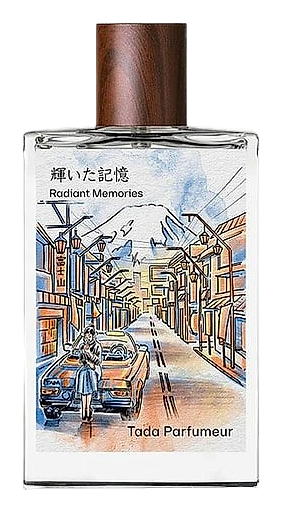
Radiant Memories belongs to the Reminiscence of Nippon collection, Tada Archawong's series of scent-autobiographies rooted in Japanese landscape and light. This one captures the hour when the sun crests Mount Fuji and the whole valley turns gold. It's a specific memory, translated into raw material: bright citrus and apricot at the opening, the kind of warmth that feels almost physical, then a heart of jasmine softening into the dusk. The praline and vanilla arrive last, intimate and close, like warmth that stays after everyone else has gone.
The apricot-vanilla pairing is familiar territory. What sets this apart is the powdery iris, it threads through the sweetness like a qualifier, keeping the gourmand notes from becoming syrupy. The praline isn't a sugar-bomb either; it's the edible warmth underneath rather than the main event. Dried fruits in the top give the opening a raisined depth that keeps it from smelling like candy. The result is sweet without being childish, warm without being heavy, a composition that earns its Mount Fuji reference by being luminous rather than loud.
The evolution
The opening announces itself quickly, apricot and orange arrive bright, almost candied. That citrus burst holds for thirty minutes before the iris takes its position, dusting everything with powder. The jasmine appears around the hour mark, not as a loud floral but as a soft warmth underneath. From here the praline and vanilla begin their slow reveal, feeding into the drydown until the whole thing becomes edible and close. On most skin types this lasts a full workday, the sillage dropping from moderate to intimate by hour three. The base clings, praline and vanilla on the wrists, musk and iris still readable the next morning.
Cultural impact
Radiant Memories is part of the Reminiscence of Nippon collection, a series built around specific Japanese landscapes and light. It's positioned for the collector who wears memory rather than status, and it finds its audience among those who want warmth without loudness. This collection honors the Japanese concept of mono no aware, the gentle sadness of impermanence.