The Story
Why it exists.
The beginning
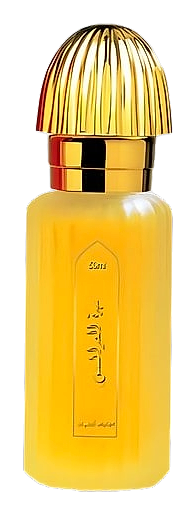
The name sets a scene before you smell a thing, the way Arabic perfumery so often does. Picture the henna night, the gathering of women around incense and rosewater, the room thick with anticipation. Swiss Arabian bottled that atmosphere into a composition that leads with white floral opulence and never quite lets go. The florals arrive dense and unapologetic, the kind of opening that fills a small room without asking permission. There is no bright citrus to cut through the cream, no green sharpness to cool the heat. Instead, orange blossom and jasmine stack on top of one another until the air feels almost edible, a sweetness that borders on the narcotic.
What makes this composition worth attention is the rice note at the heart. Rice in a fragrance doesn't shout. It adds a dry, starchy softness, almost like the scent of warm grain or a silk pouch filled with raw rice. It sits between the creamy white florals above and the smoky incense below, preventing the opening from becoming one undifferentiated sweetness. Without the rice, the transition from floral to incense would feel abrupt, a sudden plunge rather than a slow descent. The rice acts as ballast, grounding the airy cream of the florals and giving the incense something soft to land on.
The evolution
The first ten minutes are a wall of white floral. Orange blossom hits first, bright and almost indolic, with jasmine threading underneath and rose adding a candied warmth. There's no citrus to lighten it, no green to cool it. The florals sit heavy and confident, the kind of opening that fills a small room and asks nothing of the air around it. The orange blossom carries a honeyed edge, sweet but not syrupy, and the jasmine underneath adds that creamy, almost animalic depth that keeps the blend from reading as flat. The rose rounds everything out, lending a jammy warmth that ties the florals together. Around the thirty-minute mark, the rice note surfaces, subtle and almost dusty, and the incense begins to rise. Frankincense here is rich and resinous, not dry or medicinal. It carries the florals downward, pulling them into something warmer and more grounded. The transition isn't abrupt.
Cultural impact
Sahret Al Arais sits firmly in the white-floral-and-incense corner of Arabian perfumery, a style that has long been a staple of the genre. The composition leans into the weight and warmth that define that tradition: dense florals, resinous smoke, and a sweetness that reads as ceremonial rather than casual. There is no oud grounding the base, no sharp citrus cutting through the opening. Instead, the fragrance stays close to its core materials and lets them speak at full volume.