
The Story
Why it exists.
The beginning
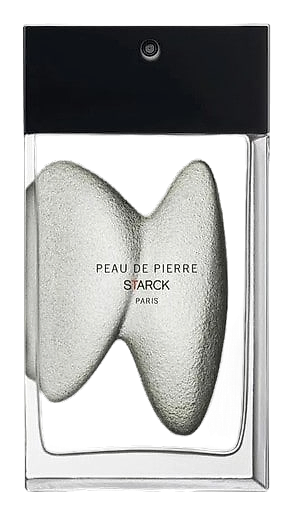
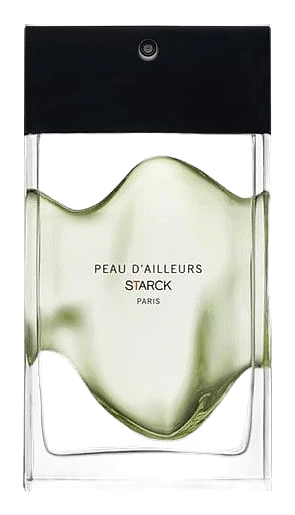
Starck Paris launched in 2016 with a simple premise: skin as raw material. Peau d'Ailleurs, Skin of Elsewhere, explored this concept through a mineral, iris-forward composition that feels quietly unsettling. Annick Ménardo translated Starck's abstract direction into something that captures that strange familiarity of skin you've encountered but can't quite place. The name says it all: this is skin you've never worn before.
What makes Peau d'Ailleurs unusual is the iris. Not the powdered, cosmetic iris most people recognize, the rooty, almost vegetable kind. Paired with vetiver that reads wet and damp, almost fermented, the composition refuses to be polite. The mineral accords in the opening aren't just a freshness device, they're the scent of somewhere unfamiliar, a Terra Incognita rendered in molecules. It's the kind of combination that takes risks: some will find it strange, others will find it unforgettable.
The evolution
The opening, violet leaf, mineral, green, gives way quickly. That's the first surprise: the freshness doesn't linger. Then the iris arrives. Rooty. Damp. Earthy in a way that isn't soil exactly, more like the smell of a root vegetable pulled from wet ground. The vetiver deepens this effect, almost fermented, like wet stone after rain. Some find this divisive. It isn't pleasant in the conventional sense. But it is memorable. By the mid-drydown, the green fades and the composition settles into mineral and musky territory. Patchouli and vetiver ground everything into warm skin rather than clean fabric. The final hours are intimate. Close. The kind of longevity that stays without screaming.
Cultural impact
Peau d'Ailleurs arrived in 2016 as part of Philippe Starck's move beyond industrial design into fragrance. Rather than treating scent as a lifestyle accessory, Starck asked what a perfume says when someone leans close. The mineral-fresh iris composition offered an alternative to prevailing oud and ambroxan trends, feeling almost clinical in its precision. This philosophical approach attracted a specific audience: design-conscious consumers who viewed their fragrance as a considered choice rather than a signature statement.