
The Story
Why it exists.
The beginning
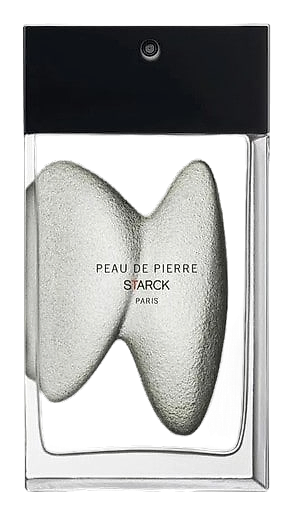
Peau de Pierre translates to 'Skin of Stone', and that title is the brief. Philippe Starck, the industrial designer who spent decades rethinking objects from lemon squeezers to hotel lobbies, approached perfumery the same way: ask what it's actually for, then do that. Mineral warmth. Something that smells like skin but feels like material. The fragrance opens with a cool, almost crystalline mineral accord that feels like touching a sun-warmed stone on a cool morning. As it settles, the scent deepens into a dry, earthy vetiver that grounds the initial chill, while a subtle ambroxan note adds a skin-like warmth that evolves throughout the wear. The heart reveals a faint metallic quality, like iron touched by breath, balanced by soft musks that pulse gently against the stone-like backdrop.
The notes list reads like a negotiation between two different fragrances. Caraway, bergamot, and cardamom in the top, spicy, aromatic, almost edible. Then angelica, jasmine, cinnamon, clove, a heart that leans into warm herbs and indolic florals. The base settles into sandalwood, vanilla, incense, labdanum, amber, and musks, the full warm-down. What's unusual is how little any of these fight for dominance. Instead of a war, it's a town hall meeting. The synthetic molecule the brand references, that 'riddle more real than nature', sits underneath everything, giving the natural materials a slightly elevated, almost sculptural quality.
The evolution
It opens bright. The bergamot and cardamom arrive together, sharp and clean, like walking into a stone courtyard at noon. The caraway adds a faint anise-like edge, herbal, not sweet. This phase lasts maybe twenty minutes before the warmth takes over. The heart notes announce themselves gradually: angelica root comes first, earthy and slightly bitter, followed by jasmine peeking through the clove and cinnamon. The combination smells like a specific memory, burnt herbs on warm skin after a long day. Then the smoke arrives. Not barbecue smoke. Incense smoke, the kind that settles into wool. The woody base holds everything together, sandalwood and labdanum doing the heavy lifting while vanilla and amber sweeten the edges just enough. By hour four, it's skin and stone again, the opening and closing mirroring each other. The drydown on clothes lasts into the next day: faint, warm, intimate.
Cultural impact
Peau de Pierre occupies an unusual position: a men's fragrance that openly discusses gender ambiguity and the 'masculine-feminine divide.' The brand describes it as 'a masculine fragrance that reveals a man's feminine side', language that challenges conventional assumptions about who a fragrance is for and what it should communicate. Wearers who connect with it tend to be drawn to its refusal of conventional masculinity in scent form. The fragrance presents mineral coolness alongside intimate warmth, cold surface alongside human presence, creating an olfactory tension that mirrors the gender dynamics it invokes.