
The Story
Why it exists.
The beginning
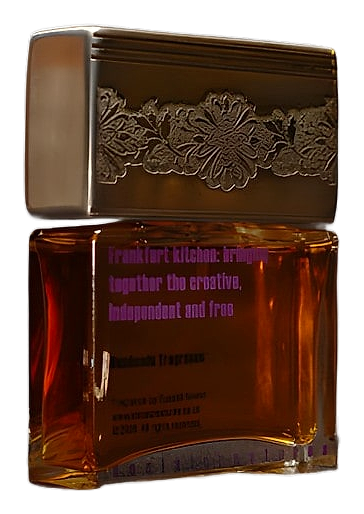
Russell Newell named this 2008 fragrance after the Frankfurt Kitchen, the revolutionary 1926 built-in kitchen designed by architect Margarete Schütte-Lihotzky for social housing in Frankfurt. It was one of the first times women's labor in the home was taken seriously as a design problem. The kitchen had open aluminum bins for rice and lentils, and dried fruits, raisins, prunes, left their mark on the wood. Newell captured that memory. Warm, practical, quietly radical. The name says domesticity. The fragrance says otherwise.
What makes this composition work is the dried fruit and coffee pairing. Raising coffee with dried fruits isn't a conventional move, it leans toward the edible without sliding into confectionery. The mint amplifies the coffee's bitter edge, then retreats before it overwhelms. Osmanthus adds an apricot-jasmine nuance that pairs unexpectedly well with the raisin, giving the dried fruit note more dimension than a standard fruity base would allow. This is a kitchen in amber light, not a pastry shop.
The evolution
The opening hits like a cold tile floor, mentholated, bright, coffee and peppermint asserting themselves without apology. For the first twenty minutes, this is bracing more than warm. Then the honey arrives, slow and inevitable, and the dried fruits start to assert themselves. Amber wraps everything in a sweet, slightly resinous glow. The mint doesn't disappear, it softens, becomes a cool undertone beneath the warmth. By the third hour, the coffee has faded to a memory and the honey-vanilla-dry fruit core is all that remains, intimate and close. The raisin outlasts everything else, clinging to warm skin long after the rest has settled.
Cultural impact
Frankfurt Kitchen occupies an interesting position among niche gourmands, its coffee-mint opening sets it apart from the warmer, sweeteroriental leanings common to the genre. The 2008 launch predates much of the current wave of foodie fragrances, making it an early experiment in combining edible notes with an unexpected coolness. Wearers drawn to it tend to appreciate the historical context: a fragrance named for a piece of feminist design history, made wearable through Newell's understanding of how sweetness and sharpness can coexist.