The Story
Why it exists.
The beginning
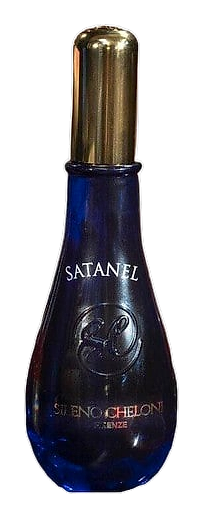
Satanel was launched in 2024 by Sileno Cheloni Firenze Maestro Profumiere, a Florence-based fragrance house. Its inspiration is the fallen angel once called God's favorite, placing the fragrance at the intersection of ancestral elegance, transgression, and redemption. The name carries an obvious religious weight, while the composition moves through contrasting materials. Rose contributes beauty and vulnerability, frankincense brings a resinous quality to the opening, and saffron introduces a flash of heat. Together, these notes create a composition built around tension and contrast, drawing on the fallen-angel theme without defining the fragrance through a single, fixed interpretation.
The striking part is the contrast inside the palette. Rose and frankincense create a composed pairing, while patchouli pulls the composition toward damp soil and dark foliage. Saffron adds its own tension as the rose moves from floral warmth into a darker, more earthy setting. At the base, oud brings depth and smoke, cypriol adds an earthy mineral edge, and musk provides a clean, close presence. Nothing here reads as a simple floral or a straightforward oriental. The materials pull in different directions, and that friction gives Satanel its character.
The evolution
The opening starts with rose and frankincense, where soft floral warmth meets resinous smoke, followed by the spice of saffron. As the heart develops, patchouli becomes more prominent, deepening the rose with earthy weight. The composition moves from its initial floral and resinous character toward the darker materials of patchouli, oud, and cypriol. Oud contributes depth and smoke, while cypriol gives the drydown a woody, mineral edge. Musk appears in the base, adding a clean, close layer that rounds out the composition. The note structure presents a gradual progression from rose, frankincense, and saffron to patchouli, oud, cypriol, and musk, with each stage adding a distinct texture to the scent.
Cultural impact
Satanel takes its central idea from the fallen angel once called God's favorite, giving the fragrance a name rooted in religious mythology and a theme shaped by contradiction. Its composition reinforces that sense of tension through rose, frankincense, saffron, patchouli, oud, cypriol, and musk. The floral warmth of rose sits against resinous frankincense, while patchouli and the woody base materials bring earthy and mineral dimensions. Rather than relying on a single dominant note, the fragrance builds its character from contrasts, inviting exploration of how each material changes the character of the others.