The Story
Why it exists.
The beginning
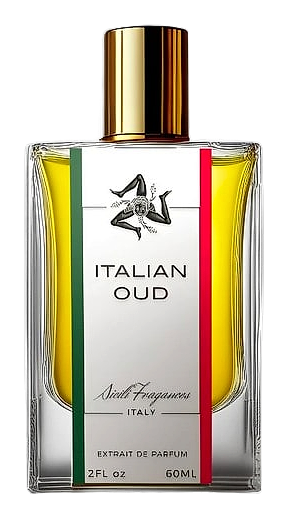
Italian Oud arrives as a different kind of statement. Where most of the catalogue leans into edible nostalgia, this one reaches for something older and darker: the wood itself, rendered through a Mediterranean lens. Bergamot opens the composition with a sharp, luminous citrus note that cuts through the air. The scent carries a particular brightness, clean and almost astringent at first, with a delicate floral undertone that emerges as the top notes begin to breathe. As the opening settles, the wood becomes more apparent, not immediately, but gradually, like afternoon light moving across a stone floor. There's a resinous warmth underneath that suggests the composition isn't simply about citrus or wood in isolation.
Oud anchors the base, supported by ambergris and benzoin that contribute warmth and a soft resinous quality. Tonka bean introduces a sweet, slightly vanilla-like richness that gives the foundation a creamy depth rather than sharpness. Palisander rosewood, a wood with a dry, slightly peppery character, threads through the composition without dominating it. The overall effect is a woody base that feels warm and present, with a subtle complexity that reveals itself slowly as the fragrance develops on the skin.
The evolution
The first twenty minutes belong to Calabrian bergamot in its most literal form, bright, sharp, slightly tart, like biting into the peel rather than the fruit. Labdanum arrives within minutes, a resinous warmth that keeps the citrus from being purely clean, and the Italian orange brings a rounder, almost marmalade sweetness that softens the edges. By the thirty-minute mark, the orange blossom takes over as the dominant voice, turning the composition toward something floral and intimate without losing the citrus backbone entirely. The coriander is subtle, a green, slightly peppery undertone that you notice only when you're paying attention. The real shift happens around the two-hour mark: the oud begins to emerge from beneath the florals, not aggressively, but like something surfacing from warm water. Benzoin and tonka bean create a sweet, balsamic platform that the oud lands on rather than crashes into. The drydown is where this fragrance earns its name, a warm, resinous, slightly animalic wood that stays close to the skin for hours.
Cultural impact
Italian Oud offers a different take on oud, one that emphasizes warmth and intimacy over the kind of intensity the ingredient is often expected to deliver. The composition sits close to the skin, present without being announced. For those drawn to oriental depth but wary of theatrical sillage, this approach to the material feels like a welcome alternative. The warmth builds gradually, the wood and resin notes settling into the skin rather than filling the space around it. It's an oud that rewards attention from those nearby rather than announcing itself across a room.