The Story
Why it exists.
The beginning
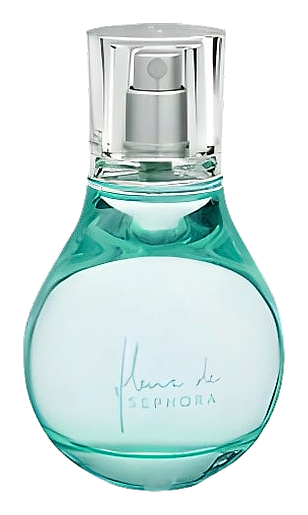
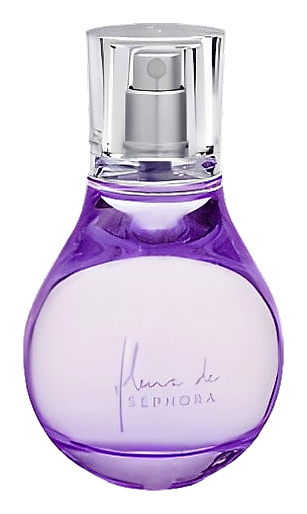
Blue Lilac entered Sephora's private-label collection somewhere in the early-to-mid 2010s, though the exact year gets murky depending on where you look. One database lists 2015, another pins it to 2012, and the bottle itself offers no clarification. What the sources do agree on is the brief: a single floral, nothing more, nothing masked. The note list contains exactly one entry, and that entry is lilac. No top, no heart, no base. Just the flower. Where the early private-label releases explored fuller bouquets, this one narrowed the lens considerably, committing to restraint as a statement. Build a lilac that smells like lilac, and don't dress it up.
What makes a lilac fragrance worth your time is everything that isn't lilac, or more precisely, what happens when a perfumer commits fully to one notoriously difficult flower. Lilac is a raw material with almost no usable natural extract in modern perfumery. The blossom yields very little through traditional methods, and what little can be captured often disappoints. Most lilac fragrances, including this one based on its stripped-down presentation, rely on synthetic reconstruction to approximate the scent. The result is rarely a botanical record.
The evolution
The opening is the most expressive Blue Lilac gets, and it's generous with that expression. That green-white floral hits immediate and full, like pushing your nose into a fresh bouquet on a cool morning. There's a green almost-vegetal quality underneath, the kind of raw, just-snapped crispness real lilac carries before the blossoms fully open. As the composition settles, the sharpness retreats. What replaces it is softer, more powdery, less specific, more skin-like. Almost like the scent of fabric softener that's been folded and put away for a season, or the trace ghost of a sachet tucked into a linen closet. The floral character never disappears, but it shifts register from bright and stem-forward to warm and petal-soft. In the later stages, projection softens considerably.
Cultural impact
Blue Lilac occupies a small but specific corner of the fragrance world: a retailer-private soliflore committed entirely to a single flower. It commits to that note with unusual discipline, presenting lilac without the supporting cast of woods, musks, or ambers that often accompany floral launches. The fragrance reads as a quiet holdout, the kind of straightforward composition that feels increasingly rare as more elaborate formulations dominate shelf space. As one of the more accessible lilac options available at mainstream retail, it functions as an entry point for shoppers curious about a note that rarely gets a solo stage.