
The Story
Why it exists.
The beginning
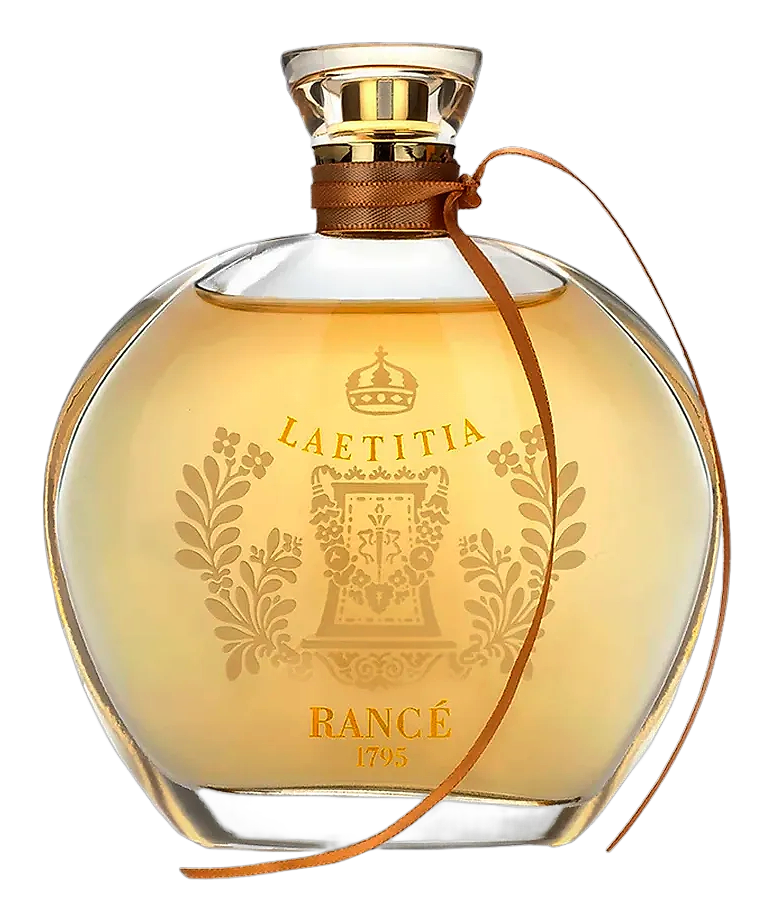
Laetitia Millesime pays homage to Laetitia Bonaparte, mother of Emperor Napoleon, a woman whose quiet authority shaped an empire. In 2008, Jeanne Sandra Rance drew from the house's family archives to compose this scent, selecting the most precious materials available to honor that legacy. The result lives in the Impériale collection, a curated line that carries the weight of the Rancé name forward into the present.
What makes Laetitia Millesime structurally unusual is how the balsamic resins, tolu balsam and labdanum, work in tandem with the patchouli rather than against it. Most fragrances let patchouli dominate or hide behind sweeter materials. Here, the resins arrive early and act as a bridge, carrying the floral heart into a base that feels cohesive from start to finish. The wisteria is the quietest note in the pyramid but it's doing essential work, adding a lilac-adjacent softness that prevents the nutmeg from sharpening into something too spicy. It's a composition that rewards patience.
The evolution
The opening announces itself with mandarin and bergamot, bright, clean, citrus that doesn't overstay. Within fifteen minutes the orange blossom emerges, sweeter and creamier than the citrus, and the two layers begin to blur together into a single effervescent top. Then the heart arrives. The nutmeg arrives first, a clean heat that cuts through the powder, before the Bulgarian rose and magnolia expand into full bloom. The wisteria adds a translucent softness that keeps everything lifted rather than heavy. By the third hour the patchouli asserts itself, resinous, dark, almost camphorated, but the vanilla and labdanum are already rising to meet it. The base that follows is warm and intimate, the kind of drydown that stays close to skin for six to eight hours, detectable on fabric the next morning as a faint amber-vanilla trace.
Cultural impact
Laetitia Millesime occupies a specific corner of the niche market, powdery amber florals with a resinous backbone, appealing to collectors who want depth without the heavy sillage of classic Orientals. Its longevity scores consistently above average, a practical quality that draws wearers who value a fragrance that works as hard as they do.