The Story
Why it exists.
The beginning
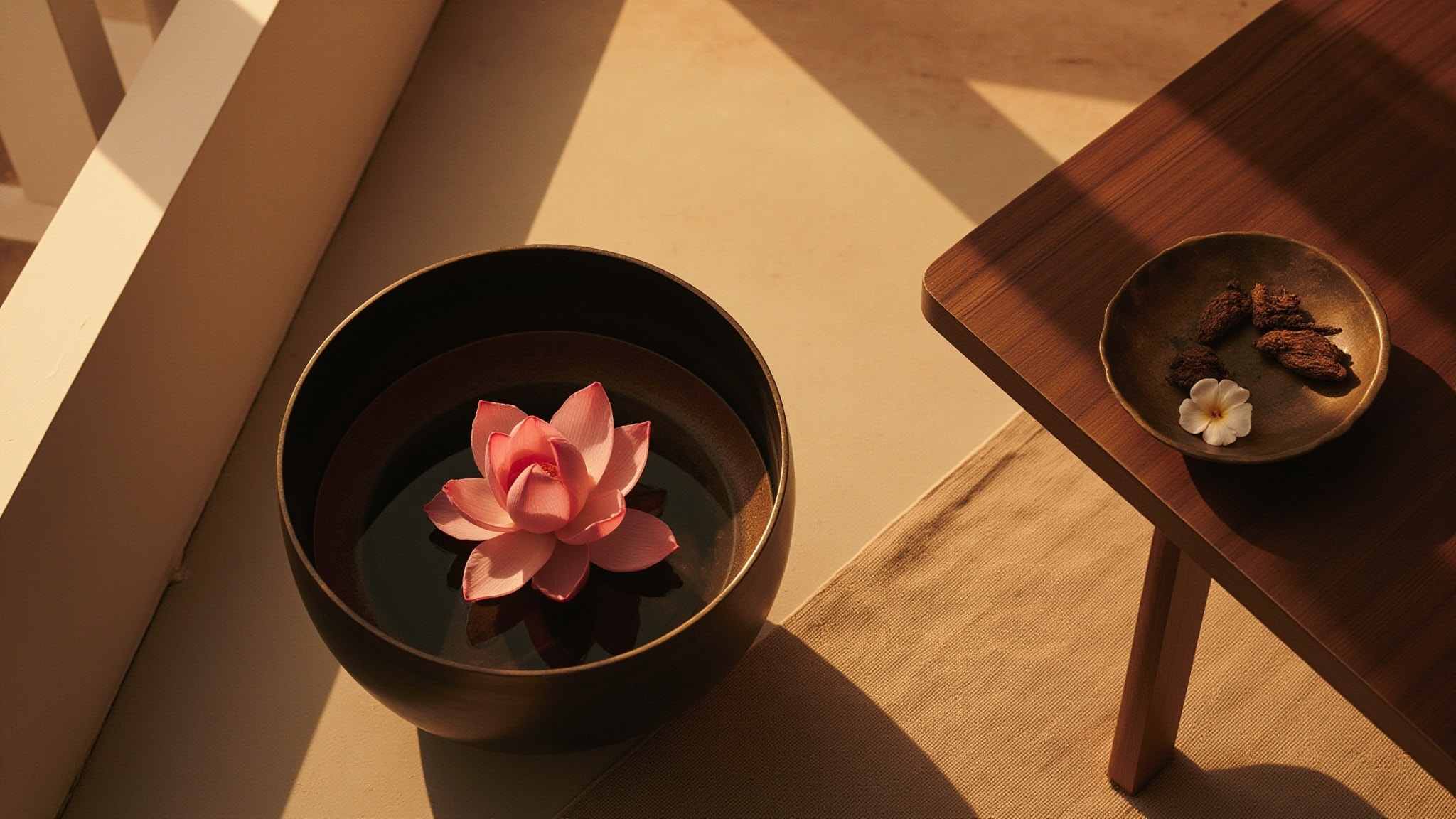
Padma refers to the sacred water lily, also known as the lotus flower. In Indian devotional tradition the blossom carries the soul's awakening toward its spiritual dimension, a symbol of transition from depth into light. The fragrance draws its name directly from that referent: the blossom as threshold, the opening as movement from below the surface into the air above it. Ramakrishnananda composes this as an attar, placing it within the older Indian tradition of oil-based sacred perfume. The attar form is central to the work, and the notes of clove, rose, jasmine, and lotus are combined to evoke the sensory moment of the flower itself: the water below, the warmth above, the held breath between.
What's interesting here is what leads. Clove sits at the front, not buried in a base or orbiting a dominant rose. That ordering gives the spice the first word, and the florals respond. The lotus functions less as a standalone note and more as the gesture that holds everything in suspension, the space between clove's heat and jasmine's cool white breath. Clove opens with that dry, slightly bitter quality before warming into its sweeter, rounder self, and that thermal arc shapes everything that comes after.
The evolution
The first minutes are clove, dry and sharp, almost bitter before the warmth arrives. Then jasmine enters from underneath, softening the edge without rounding it off. Rose shows up in the middle stretch, not as a headliner but as texture, something that makes the air feel denser. Lotus appears late, reading less like a note and more like a humidity change, a quiet lift. As the composition wears on, the clove mellows into something warmer and sweeter, the kind of spice that sits closer to skin. The jasmine keeps its presence longer than expected, lingering as a cool thread woven through the warmth. The drydown is quiet: rose softened into something almost powdery, the faint memory of spice, the faint memory of water. The progression from opening to drydown traces a clear arc from spice-led heat through floral fullness to a watery stillness.
Cultural impact
Padma carries a quiet but layered cultural footprint rooted in the attar tradition, where fragrance is treated less as adornment and more as an aid to inward focus. The name, drawn from the sacred water lily, places the oil within a long lineage of devotional scents produced by Ramakrishnananda. Clove, rose, jasmine, and lotus each arrive with their own associations in Indian fragrant practice, and their combination here reads as a deliberate invocation rather than a simple floral arrangement.