
The Story
Why it exists.
The beginning
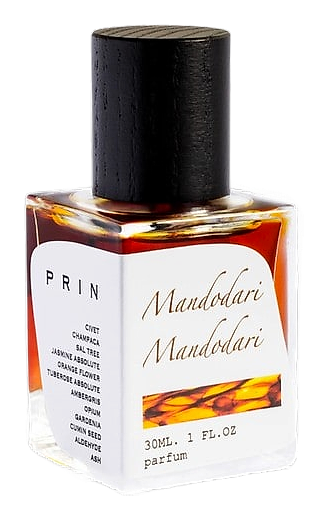
Mandodari Mandodari takes its name from the mythological queen of Lanka, the wife of Ravana in the Ramayana, a figure of quiet power and tragic devotion. Prin first released Mandodari as a singular aldehydic floral statement. This version doubles the fragrance oil concentration to 48%, building on that original vision with greater intensity and presence. The name alone carries weight in Thai cultural memory, a woman whose story was defined by loyalty, sacrifice, and the unbearable beauty of difficult choices. That tension runs through the scent itself: white florals at their most luminous, animalic notes that don't apologize for what they are. The original Mandodari established the template. Mandodari Mandodari is what happens when you push that template further, louder, and closer to the skin.
The doubled concentration isn't just a marketing claim, it's a structural shift. More aldehydes mean a sharper, more pronounced lift in the opening, that characteristic cool-bright bloom that carbon-chain molecules create when they hit air. More jasmine absolute and gardenia in the heart means a richer, almost oily floral density. More Thai civet means the animalic bass note that grounds the sweetness arrives earlier and stays longer. At 48% fragrance oil, this sits in parfum territory typically reserved for vintage concentrations, the kind of load that was standard in mid-century perfumery before cost-cutting became industry practice.
The evolution
The aldehydes hit first, bright, cold, almost metallic. Jasmine absolute and gardenia bloom underneath, sweet and waxy, while champaca adds a creamy counterpoint. This phase reads cool despite the richness. Give it twenty minutes. The Thai civet arrives without ceremony, threading its animalic musk through the florals like iron through silk. The orange blossom absolute that brightened the opening begins to recede, leaving tuberose absolute and gardenia in a dense, slightly narcotic duet. By the second hour, the florals are still present but the base is taking over. Sandalwood and teakwood provide warm, slightly oily woodiness. Patchouli adds its earthy, slightly fermented depth. Labdanum brings a sticky, balsamic resin. Ambergris softens into a skin-like musk. Tobacco leaves a smoky, sweet-leaf trace. Then, the surprise. Ash arrives last, sharp and almost carbon-like, cutting through the warmth like a match struck in a room that was already warm. The drydown clings.
Cultural impact
Mandodari Mandodari occupies a specific and rare position in the niche fragrance landscape, a white floral with genuine animalic courage. Most modern white florals soften or sanitize their animalic elements. This one doesn't. The doubled concentration at 48% fragrance oil places it in vintage territory, the kind of load that was standard in mid-century perfumery before cost pressures shifted the industry toward lighter concentrations. Wearers who connect with it tend to describe it as the scent of someone who walks into a room and doesn't need to announce themselves. The aldehydic opening either commands attention immediately or reads as too much, that initial cold-bright phase is genuinely polarizing.