

The Story
Why it exists.
The beginning
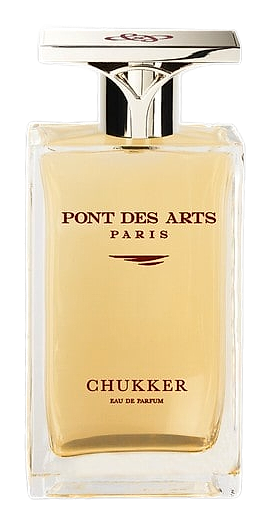
Pont des Arts gave the brief: powerful, connoted in its aphrodisiac effects, density as a design principle rather than a flaw. What Duchaufour delivered was a fragrance that operates like a held gaze, the kind that arrives with confidence and doesn't look away. The structure of the composition follows a deliberate arc, with an opening that announces itself immediately, a heart that holds steady, and a drydown that leaves its mark long after the initial encounter. This is not a fragrance that asks permission, it makes its presence known with authority and holds space with conviction.
The note architecture is unusual in how deliberately heavy it is. Where most contemporary orientals soften their edges for wearability, Chukker leans into its density. The reinforced cinnamon in the top notes isn't an accident, it's the opening argument. Saffron amplifies it, adding both heat and a faint smokiness. The heart layers black tea and blonde tobacco against incense, rose oil, and lily of the valley: a floral-to-smoky bridge that most perfumers would treat as contradictory. Duchaufour treats it as structural. The base, oud, castoreum, styrax, vanilla, doesn't fight for space. It arrives because everything before it has already made room.
The evolution
The opening is the statement. Cinnamon and saffron hit simultaneously, bright and biting, with a sweetness underneath that suggests heat rather than warmth. The black tea appears as the composition unfolds, slightly astringent, grounding the spice in something cooler. The tobacco follows, not as smoke but as a dry, slightly honeyed presence. Incense threads through, settling everything into place. The oud establishes itself in time, supported by cypriol and vetiver that give it somewhere to sit, earthy and dry. The castoreum surfaces as leather without animalic harshness, a warmth that reads as skin rather than sweat. What remains at the end is a faint warmth of benzoin and vanilla, close to the skin.
Cultural impact
Chukker occupies a specific position in the landscape of contemporary oriental fragrances: it refuses to compromise. This French house approaches rich materials from an unexpected angle, using a prominent cinnamon presence to create a composition that feels both grounded and dynamic. The density gives the fragrance substance without tipping into excess, and the overall effect reads as purposeful rather than heavy-handed. It makes no apologies for what it is, a scent that asserts itself from the first spray and continues to assert itself throughout its wear.
The House
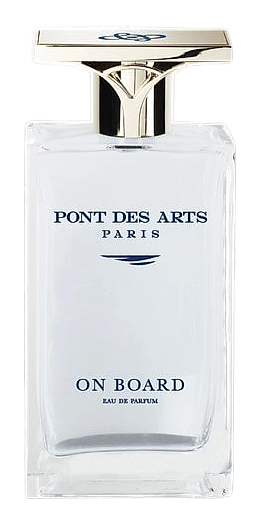
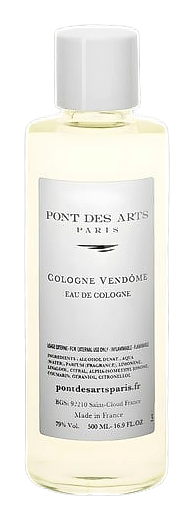
Pont Des ArtsPont des Arts is a Parisian fragrance house that launched its debut collection in 2017, taking inspiration from the historic pedestrian bridge spanning the Seine between the Institut de France and the Louvre. The brand developed its initial fragrance range over four years of research and development, working with a team combining designers, stylists, and independent fragrance creators. The bridge itself has served as both namesake and design motif, its iconic metal railings appearing as decorative elements across packaging and visual materials. The collection features French-titled fragrance names, many referencing personal moments and Parisian locations, establishing a distinct naming convention that sets the house apart from conventional naming approaches in the fragrance industry.
The Creator
Bertrand DuchaufourDuchaufour is the master of smoke and shadow, of incense rendered with painterly depth rather than theatrical force. Where many perfumers treat frankincense as a single note, he builds incense as a tonal range, capable of austerity or warmth depending on what the fragrance dem…