The Story
Why it exists.
The beginning
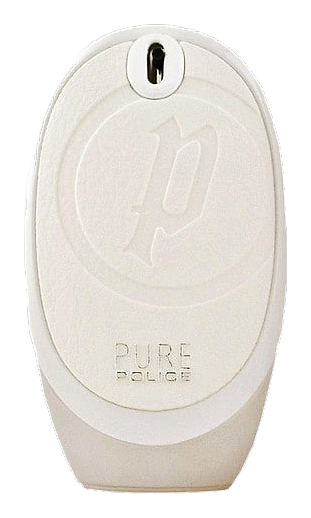
The Pure DNA line arrived in 2009 as a twin set, Pure DNA Homme and Pure DNA Femme, released together in matching bottles dressed in leather. The DNA concept suggests something essential, irreducible. For the feminine expression, that meant stripping the chypre structure down to its most recognizable gestures: violet's powdery signature, jasmine's white-floral warmth, a heart of warm spice, and a woody-musky base that closes clean. The bottle mirrored the man's in shape but switched to white against black, feminine coding without overstatement.
What makes Pure DNA Femme work is the restraint. The violet top isn't trying to reinvent anything, it opens exactly as you expect, a familiar powdery-floral that signals 'classic feminine' from the first spray. But the heart complicates things. Clove is assertive, even a little aggressive, and paired with patchouli it pushes the composition away from innocent and toward something with actual character. The sandalwood bridges the gap, adding creaminess that softens the spice without diluting it. By the time vanilla and musk arrive in the base, the fragrance has traveled from powdery nostalgia to something warmer and more grounded, without ever feeling heavy.
The evolution
The opening arrives quickly, violet and jasmine together, bright and familiar. Within minutes the jasmine recedes and the clove pushes forward, bringing a sharp warmth that changes the temperature of the whole composition. The patchouli doesn't announce itself so much as it lingers in the background, keeping the heart grounded. Around the one-hour mark, sandalwood emerges as the dominant middle voice, smoothing everything out. The transition to base takes another hour, musk arrives first, then cedarwood, and finally vanilla, which arrives last and stays longest. By hour three or four, you're left with a clean cedar-vanilla that clings close to the skin. On fabric, it lasts longer. On skin, it's intimate, meant to be discovered, not announced.
Cultural impact
Pure DNA Femme existed in a particular moment, late 2000s fragrance culture was still mining the classic chypre tradition while beginning to experiment with synthetic modernity. The fragrance didn't break new ground, but it delivered a solid, wearable interpretation of that tradition at a mid-market price point. Its discontinuation means it's harder to find now, which has given it a slight cult following among those who remember it and discovered it secondhand. The twin-set release strategy, launching Homme and Femme simultaneously in matching bottles, was common in that era but signals a brand thinking about fragrance as part of a broader lifestyle image rather than a standalone artistic statement.