
The Story
Why it exists.
The beginning
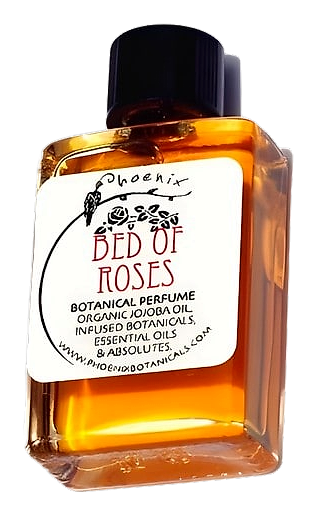
Bed of Roses by Phoenix Botanicals places rose at the center of a much earthier floral world. The name makes the first association obvious: roses resting, bruised perhaps, somewhere after their most polished moment. But the note list pushes past the bouquet and into the garden beneath it. Rose shares the frame with oakmoss, vetiver, violet, neroli, jasmine, carnation, angelica, champaca, and oud. Nothing confines the composition to a single expression of rose, whether tender, powdery, aromatic, or green. The result feels floral without becoming polished or detached, with petals, leaves, roots, moss, and damp soil all held within the same frame. On skin, rose can read plush and dewy beside the cooler greenery of violet and angelica, while jasmine and champaca lend a soft floral fullness.
What makes Bed of Roses interesting is the overlap between its listed materials. Rather than separating a polished bouquet from a sharply distinct foundation, the rose sits among violet, jasmine, carnation, champaca, neroli, angelica, oakmoss, vetiver, and oud, allowing the different textures to blur together. Oakmoss and vetiver bring earth, dryness, and structure to the floral accord. Violet and carnation can give rose a powdery, old-fashioned softness, while jasmine adds a more luminous floral presence.
The evolution
Bed of Roses can be read through the changing relationship between its floral and earthy materials. At first, rose may take the lead with a plush, dewy presence, joined by violet and the greenish brightness associated with neroli and angelica. Jasmine, carnation, and champaca build a fuller floral impression around it, with violet adding a powdery softness and champaca a creamy, lingering richness. Oakmoss, vetiver, and oud keep the composition grounded. As the brighter floral character becomes less pronounced, the darker materials can seem more distinct: moss evokes a cool green-brown surface, vetiver suggests dry roots and vegetation, and oud brings resinous depth. Violet and jasmine can continue to lend softness, preventing the woody and earthy notes from defining the scent on their own.
Cultural impact
Bed of Roses offers a distinctive way to experience rose through Phoenix Botanicals. Instead of relying on rose alone, the composition places it beside violet, jasmine, carnation, neroli, champaca, and angelica, then grounds the floral frame with oakmoss, vetiver, and oud. Flowers, moss, roots, and resinous materials occupy the same space, creating a scent that can be appreciated for both its softness and its darker, more terrestrial character. The result rewards close attention as rose changes against the materials surrounding it, moving between radiance, powder, greenery, damp earth, and resin.
The House
Phoenix BotanicalsPhoenix Botanicals creates natural perfume blends that read like miniature stories. Each scent combines wildflowers, resinous woods and earthy roots, offering a tactile link between scent and memory. The brand sits at the crossroads of traditional alchemy and contemporary hand‑craft, inviting wearers to explore a garden of nuanced aromas. Founded in the early 2010s, the label remains small‑scale, producing limited batches that emphasize ingredient integrity and transparent sourcing.
The Creator
Irina AdamIrina favors wildcrafting over cultivated farms, seeking herbs and blossoms that grow untamed in Romanian meadows. She crushes fresh petals by hand, then lets them steep in carrier oils or neutral alcohols for weeks, extracting volatile notes without heat.