
The Story
Why it exists.
The beginning
Satomi is a name rooted in Japanese heritage, suggesting clarity, quiet strength, and an understated elegance that transcends cultural boundaries. Parfums Genty, a French house founded in 1975 by a former perfumer at a major Parisian maison, has spent decades building a catalog that respects classical craftsmanship while remaining unafraid to explore unexpected territory. The name Satomi Pink arrived in 2008, landing in a landscape crowded with sweet florals and safe fruity arrangements. The choice of name was deliberate: it promised something more nuanced than the average pink fragrance. This wasn't about sweetness as a default setting. It was about capturing a specific kind of femininity, one with dimension, wit, and a willingness to take up space without announcement.
What makes Satomi Pink structurally interesting is its refusal to let the fruit run the show. In most floral-fruity compositions, the heart notes dominate and the base arrives as an afterthought, a vague warm settle. Here, the woody notes and musk work in counterpoint to the raspberry and peach, preventing the composition from flattening into a single note. The bergamot-grapefruit opening does the heavy lifting of setting a tone: bright, assertive, citrus-forward rather than sweetness-forward. The rose doesn't announce itself; it softens the edges of the jasmine and provides a bridge between the sharp opening and the fruit heart.
The evolution
The opening hits like a glass of grapefruit juice held up to morning light. Sharp, immediate, citrus oils hitting the skin with an almost astringent clarity. Thirty seconds in, the jasmine arrives, not the heady, indolic jasmine of night florals, but something cleaner, more composed. The rose sits underneath, adding body without weight. Within five minutes, the bergamot begins its slow retreat, and the fruit accord takes over: raspberry first, then peach, then the red berries adding a slight tartness that prevents the composition from going saccharine. This is the fragrance's most likable phase, accessible, warm, easy to wear. The drydown is where Parfums Genty's intentions become clear. The woody notes don't arrive as a dramatic shift; they seep in gradually, adding structure to the sweetness. The musk keeps everything intimate, close to the skin rather than projecting outward. By the fourth hour, what remains is a soft skin-warm accord of raspberry over musk, present but not demanding.
Cultural impact
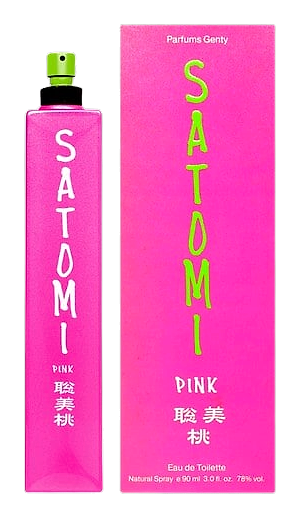
While not part of a massive fashion house empire, Satomi Pink taps into the visual language of contemporary beauty culture. The 'pink' naming and packaging connect to a broader movement in Asian and global beauty markets where pink signifies approachability and youthful femininity. This fragrance exists in a space where beauty, self-care, and identity intersect, particularly for younger demographics who may find traditional luxury perfumery intimidating. The straightforward fruity-floral composition reflects a democratization of fragrance design, where accessibility trumps complexity.