The Story
Why it exists.
The beginning
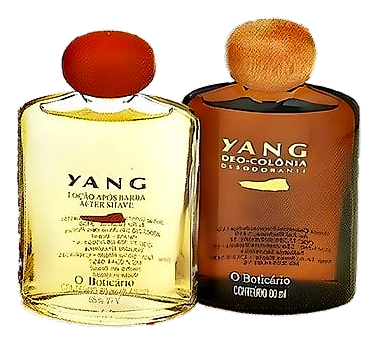
Yang launched in 1991, when O Boticário was building its identity as Brazil's answer to the great fragrance houses. The name itself signals intention, drawn from the complementary principle, the counterpoint. Where other Brazilian releases leaned into tropical sweetness, Yang took a different position: dry, botanical, and rooted in the earth rather than the coast. The brief seems to have been simple, create a masculine scent that felt grounded without feeling heavy. Bergamot and cypress opened the formula with a certain crispness, the kind that reads as clean without smelling soapy. Carnation in the heart added a spice that most 1991 releases were avoiding in favor of aquatic or fougère conventions. Oakmoss anchored everything to something older, more geological. The result was a fragrance that didn't chase trends because it assumed it had already arrived somewhere worth being.
What makes Yang structurally interesting is the lavender appearing twice in the pyramid, listed as both a top and heart note. That's unusual. Most fragrances treat lavender as a single-phase player, the opening act that exits once the base starts talking. Here it bridges, carrying from the aromatic opening into the warmer heart where carnation is already waiting. The two notes don't compete; they negotiate. Carnation brings its clove-like warmth, and lavender keeps it from getting too heavy. Downstairs, the base is doing something similar, the earthy trio of oakmoss, vetiver, and patchouli holds the sweetness of sandalwood at arm's length. Musk appears, but it's not the point.
The evolution
The opening hits with bergamot's citrus brightness cutting through cypress, that sharp, almost coniferous quality that reads as clean without trying. Lavender follows quickly, not the sweet lavender of sachets but something greener, more herbal. The handoff to the heart happens within minutes; the carnation doesn't wait. It arrives with a spice that some people describe as warm, others describe as medicinal, the line between those two experiences is thinner than most would admit. The florals don't dominate; they soften the landing. What you're left with after an hour is the base taking over: oakmoss first, then vetiver, then the quieter presence of sandalwood and patchouli underneath. The drydown is where this fragrance lives. It holds close to the skin, intimate rather than announced. On fabric, it lasts longer, the woody mossy warmth lingers into the next day if you catch it on a shirt collar. On skin, expect a full workday, then a quiet fade.
Cultural impact
Yang belongs to a moment when O Boticário was establishing its masculine identity in Brazilian perfumery. Released in 1991, it sits in a category that has since become rare: woody-aromatic fragrances that prioritize depth over trend. The carnation in the heart was an unusual choice for its era, most 1990s masculine releases were moving toward aquatic or fougère conventions. Yang didn't follow. What it offers instead is something that wears well on men who want a scent with presence but without projection. It rewards the wearer who leans in rather than the room that never asked.