
The Story
Why it exists.
The beginning
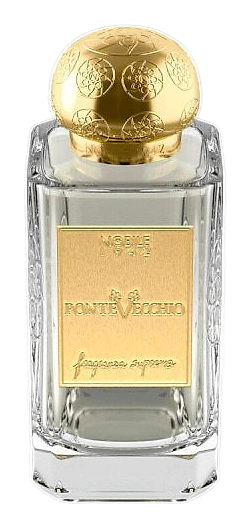
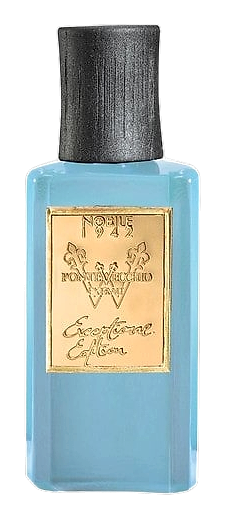
The name is a direct address. Pontevecchio is Florence's oldest bridge, medieval stone spanning the Arno, worn smooth by centuries of footsteps. Nobile 1942 released the original Pontevecchio as the house's first fragrance, an aromatic-woody composition named for that landmark. Pontevecchio W arrived as its female counterpart, sharing the bridge but diverging completely in character. Where the original carried leather and mineral coolness, this version turned toward the florals that once perfumed the Medici courts: iris fields outside the city walls, roses cultivated in monastery gardens. Marie Duchêne built it around Tuscan iris as a structural choice, not decoration, but architecture.
Iris root (orris butter) requires years of curing before it develops that distinctive powdery-violet character. It's one of the most expensive materials in perfumery, and houses that use it tend to feature it prominently rather than bury it in the base. Here, the iris sits at the center of the composition, flanked by Bulgarian rose and Indian jasmine. The citrus top is brief, bergamot and mandarin warming coriander's herbal edge, but the real work happens around the floral heart, which evolves throughout wear as sandalwood and white musk gradually emerge. This is a structured fragrance. The pyramid isn't a suggestion.
The evolution
The citrus-coriander opening arrives crisp, almost sharp, lasting perhaps thirty minutes before the iris pushes through. From there, the composition enters a long middle phase where the powdery iris note develops and deepens, violet-floral, slightly starchy, with Bulgarian rose threading through. The jasmine stays present but never dominates; it adds warmth to what could otherwise read as too cool. After two to three hours, the base notes begin to assert themselves. Sandalwood and amberwood create a warm woody foundation, while white musk keeps everything close to the skin. On most wearers, the full arc holds for four to six hours. The sillage is moderate, present in the first hour, then intimate.
Cultural impact
Nobile 1942 emerged in the early 2000s as a reaction against mass-market fragrance production, emphasizing small-batch Italian craftsmanship rooted in Bologna. The house positioned itself within the niche segment by reviving historical olfactory families and partnering with regional suppliers. Pontevecchio W, launched in 2015, represented the brand's effort to translate Florentine Renaissance aesthetics into liquid form. Marie Duchêne's iris-forward approach departed from the tuberose-heavy trend dominating women's releases that year, offering instead a powdery, contemplative alternative.