The Story
Why it exists.
The beginning
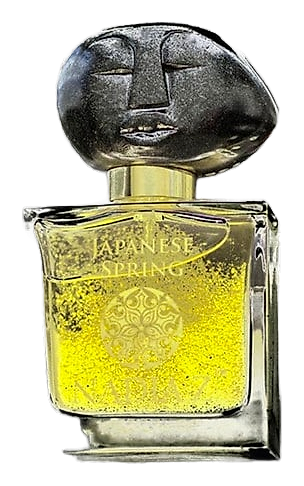
Japanese Spring landed in 2014 from perfumer Nadia Zuodar, a creator whose house operates more like a quiet philosophy than a brand. The name conjures something clean and fleeting, an image of rain passing through open air. The available description leans into that weather: watery, a well-kept secret, almost otherworldly in its lightness. The bottle design comes directly from Zuodar herself, a rare detail that signals how personally the compositions are shaped at her house. But the name does some heavy lifting. It sets up an expectation the composition deliberately refuses. There is nothing fleeting about this Spring. It lingers, it deepens, it pulls you somewhere you didn't plan to go.
Four notes carry the entire composition, and they refuse to be simple. African myrrh brings smoke and stone, less bright incense and more ancient church on a damp morning. Gardenia and hyacinth supply the floral weight, creamy and green respectively, but neither acts the way it does in mainstream florals. Both seem slightly weighed down, almost waterlogged. Then there's hyraceum, the material that makes this fragrance genuinely unusual. Hyraceum forms from the fossilized excrement of the rock hyrax, and it carries a sweet, musky, slightly fruity depth that reads as carnal on skin.
The evolution
The first 15 minutes feel like a dare. Hyacinth arrives sharp and dewy, almost mint-cool, but gardenia is already pushing underneath with a creamy, almost soapy weight. The florals feel waterlogged, like cut stems dropped in a rain barrel. African myrrh comes in early too, smoky and resinous, pressing against the green florals like a thumb against a bruise. There's sweetness here from the start, but it doesn't read as sugar. It reads as fermentation, overripe, just past fresh. By the 30-minute mark the picture shifts. The hyacinth recedes. Gardenia takes over as the dominant voice, but it's heavier now, denser, and the hyraceum begins its slow reveal underneath. That material doesn't perform. It waits. It surfaces as something between warm skin and dried fig, slightly leathery, slightly fecal if you're being honest, mostly just animal warmth that no synthetic musk quite replicates. The myrrh grounds everything, keeping the florals from floating away into typical spring territory.
Cultural impact
Released in 2014, Japanese Spring arrived as one of the more unusual offerings to surface that year, built around materials most commercial releases wouldn't touch. Nadia Zuodar's choice to anchor a spring-themed composition in hyraceum and African myrrh rather than conventional green or citrus materials gave the fragrance an immediate point of difference. Anyone who picked it up expecting a soft seasonal floral encountered something denser, stranger, and harder to categorize.