
The Story
Why it exists.
The beginning
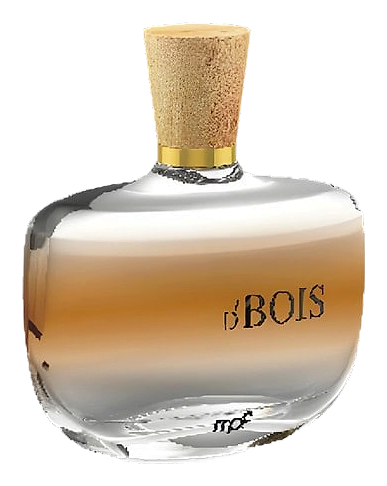
D'Bois carries a name that's a French-inflected shorthand for 'of the woods,' and the composition keeps that promise without raising its voice. Built on a violet and violet leaf opening, a cedar-vetiver heart, and a base of amber, musk, and balsam fir, the fragrance reads as a clean, quiet take on the woody aromatic category. The violet leaf gives the first impression a green, aqueous coolness, almost like crushed stems and damp earth, before the cedar and vetiver settle into the center. From there, the amber warms the blend, the musk softens the edges, and the balsam fir drops a quiet coniferous resin underneath. MPF, the Dubai-based house behind D'Bois, produces the scent as part of a broader catalogue of compositions.
The violet leaf opening is what separates D'Bois from a standard cedar-vetiver release. Violet leaf carries a green, almost metallic coolness, the scent of crushed stems and damp earth, and it gives the opening a sharpness that cedar alone can't provide. That green-cold character sits against the dry, pencil-shaving quality of the cedar, creating a contrast that runs through the early wear.
The evolution
The opening is all violet leaf, green and aqueous, almost like the smell of a stem snapped between fingers. As the scent develops, cedar enters, brushing against the violet's metallic edge and softening it into something drier, more pencil-shaving than pine-fresh. Vetiver joins the cedar, adding a rooty earthiness that grounds the composition. The violet doesn't disappear entirely, but it recedes, leaving a cool trace that lingers at the edges. Eventually the amber and musk take over, warmed up by skin, and the balsam fir asserts itself as a quiet resin underneath. The musk stays close to the body for the remainder of the wear, reading intimate rather than projecting outward. The cedar note has a way of lingering as well, faint but identifiable, like wood shavings caught in fabric.
Cultural impact
D'Bois has a slightly cooler, greener read than most cedar-vetiver releases because of the violet leaf opening, and that small structural difference is what tends to set it apart. The green, almost metallic coolness of violet leaf gives the fragrance a freshness that pure cedar and vetiver alone don't deliver, and for the wearer who finds standard woody fragrances too sweet or too heavy, that contrast can be the deciding factor. It's the kind of composition that reads well as a daily signature, the scent equivalent of a well-cut jacket: nothing flashy, nothing missing.