
The Story
Why it exists.
The beginning
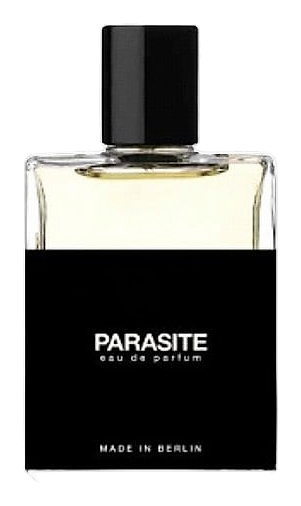
In 2020, Mark Buxton collaborated with Moth and Rabbit on a fragrance named after a film that had already become a cultural reckoning. Parasite, the Bong Joon-ho creation, traced the invisible architecture between classes: the freshly manicured lawn above, the stale basement below. The brief was simple: translate that stratification into scent. Clean, green, and artificially bright on the surface. Something heavier underneath that no amount of scrubbing will fully remove. The result is a composition that functions like a slow reveal, each phase exposing a layer the wearer didn't expect when they first sprayed it.
The pyramid structure is built on contrast rather than harmony. Grass and aldehydes open together, a pairing that sounds contradictory until you smell it. The aldehydes don't soften the green; they amplify it, giving it an almost metallic brightness that reads as synthetic, intentional, and slightly unsettling. This is not an accident. The aquatic heart then cools everything down, introducing atmosphere where there was once sharpness. The white florals, lily of the valley, freesia, arrive last in the heart, adding a fragile prettiness that almost feels like a mask over what's underneath. By the time patchouli and vetiver arrive in the base, the wearer understands: this was never about smelling pleasant.
The evolution
The opening hits like a freshly mowed lawn on a property that has something to hide. Grass and aldehydes arrive together, sharp, synthetic-bright, the kind of green that announces itself without apology. There's an almost metallic quality to the aldehydes here; they don't soften the grass, they amplify it, giving it the shimmer of light off a window at the wrong angle. Within twenty minutes, the green begins to recede. Freesia and lily of the valley emerge, delicate, then increasingly deliberate. The aquatic notes carry the florals into something atmospheric, a coolness that replaces the initial sharpness. By the second hour, the florals are fading and patchouli takes over. Not the sweet kind, earthy, slightly bitter, with an edge that refuses to play nice. Vetiver joins, adding a smoky dryness that cuts through the sweetness left behind by the florals. The drydown settles into ambroxan, musk, and guaiac wood, a quiet warmth that doesn't announce itself.
Cultural impact
Parasite occupies a specific corner of niche perfumery: the fragrance for people who want scent to do more than smell pleasant. It draws wearers who appreciate atmospheric storytelling over mainstream appeal. The aldehydic-green opening is polarizing by design, it announces itself before asking permission. Those who stay tend to be drawn to that initial confrontation rather than despite it. It's not a blind-buy safe choice, but for the right wearer, it's the fragrance that stays in rotation long after more accessible options have been retired.