The Story
Why it exists.
The beginning
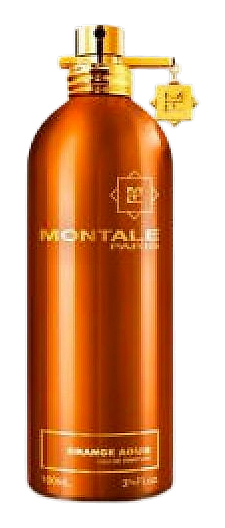
Pierre Montale spent years crafting perfumes for Arabian royalty before returning to Paris in 2003. His vision was simple: bring the depth and intensity of Eastern perfumery to Western audiences without diluting either. Orange Aoud, launched in 2014, represents that meeting of worlds at its most direct. The name says everything, a citrus element placed front and center in a house built on oud and resin. Montale wasn't interested in subtlety here. He wanted to prove that a bright, almost effervescent note could live inside something dense and resinous without canceling either out. The result is a fragrance that refuses to be categorized as purely Western or Eastern, fresh or deep. It simply is what it is: an argument that opposites strengthen each other.
What makes Orange Aoud structurally unusual is the choice of citrus. Rather than the sharp, straightforward orange or lemon found in fresh masculine fragrances, Montale reaches for bergamot, a more complex, slightly bitter citrus that carries floral undertones. This nuance matters. The bergamot here doesn't read as "clean" or "fresh" in the conventional sense. It reads as aromatic, refined, and unexpected. Combined with the warm spice of saffron (a note that sits between sweet and savory), the opening avoids the typical citrus-spice handoff and instead layers both simultaneously. The heart introduces ylang-ylang, a tropical flower with a banana-like richness that adds body without sweetness.
The evolution
The opening lands bright and assertive. Bergamot hits first, sharp and aromatic, followed immediately by oud's dense, almost tar-like resinousness. These two don't ease into each other, they collide. For the first twenty minutes, you're aware of both simultaneously, and it's slightly jarring in the best way. Then the spices arrive. Saffron and clove create a warm, slightly medicinal middle ground that softens the collision. The florals, rose and violet, emerge slowly, almost reluctantly, through the patchouli. They're there to round corners, not to dominate. By hour two, the leather and sandalwood have taken over. The oakmoss gives it an earthy, vintage quality that prevents the base from going too smooth. What lingers is warm, resinous, and intimate, the kind of drydown that stays close to the skin but refuses to disappear. On fabric, it can still be detected the next morning, a faint trace of sandalwood and leather that hints at what happened without spelling it out.
Cultural impact
Orange Aoud occupies a specific space in the Montale catalog, not the sweetest or the darkest, but arguably the most structurally complex. The chypre base (oakmoss and leather) gives it a vintage quality that stands apart from the house's typical orientals. Wearers gravitate to it for its longevity and the way the citrus-oud contrast creates something that reads as both bright and deep simultaneously. It's the kind of fragrance that divides opinion, which, in niche perfumery, often means it's doing something right.