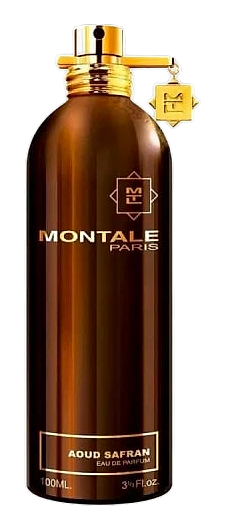

The Story
Why it exists.
The beginning
Pierre Montale spent years in Saudi Arabia before returning to Paris in 2003, and Paris Aoud Safran is one of the first expressions of that crossing. He wanted to bring the materials he'd discovered in the East, the aoud, the saffron, the rose, into a French context without diluting them. The Brown Collection was his vehicle: intense, unapologetic fragrances that refused to apologize for what they were. Aoud Safran was the statement piece.
Three materials. Saffron, aoud, and Arabian rose. Montale's official copy calls them materials with a powerful spiritual effect, and that word choice matters. This isn't a fragrance built for consensus. The saffron brings both warmth and a sharp, almost metallic brightness that catches before you expect it. The oud arrives not as a base but as a second heart, intertwined with rose rather than buried beneath it. That structural choice, letting oud and rose share the center stage, is what separates this from heavier, more monolithic aoud fragrances. The leather, oakmoss, and sandalwood arrive later, quietening everything down into something that wears close and long.
The evolution
The opening arrives like a spice market at dawn, saffron sharp and bright, cardamom threading warmth through it, clove giving it weight. Thirty minutes in, the rose blooms. Not delicate. Rich, almost jam-like, supported by jasmine and patchouli in a heart that feels denser than the top. The oud doesn't wait for the base. It rises through the heart, resinous and dark, doing something interesting to the rose, making it feel warmer, more grounded. The drydown is where this earns its reputation. Leather and oakmoss settle close to the skin, sandalwood adds cream without sweetness, and white musk keeps everything intimate. On most skin, this lasts well past 10 hours. On fabric, it lingers for days.
Cultural impact
Paris Aoud Safran belongs to the Brown Collection, Montale's statement line of unapologetic intensity. It arrived in 2009 when Western audiences were still learning what oud could be, and it didn't wait for permission. The saffron-oud-rose combination became a reference point for how Eastern materials could work in a French context without softening.