The Story
Why it exists.
The beginning
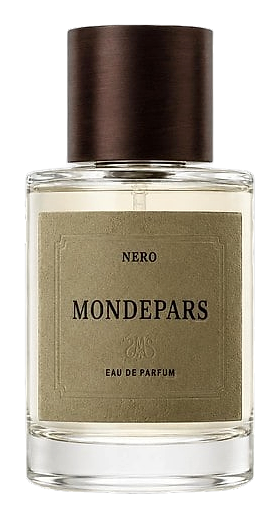
Nero was released by Mondepars in 2026 as a fragrance for women and men. The available description begins with warm, creamy sandalwood, then moves toward aromatic cardamom and elemi resin. That direction places woods and spice at the center of the scent rather than treating them as a background. The source notes add fig, leather, papyrus, lily of the valley, cedar, and musk, giving the composition a textured path from resinous brightness to a soft, woody base. Its identity comes from that sequence: dry spice and green fruit on one side, leather and creamy wood on the other.
The striking part of Nero is the contrast between its materials. Cardamom and elemi bring aromatic heat, while fig adds a juicy, green edge. Leather supplies body, papyrus adds a dry, papery character, and lily of the valley introduces a clean floral thread. Together, the notes create a layered composition in which cool green fruit, aromatic spice, smooth leather, dry papyrus, and delicate floral detail meet around a warm woody base. Sandalwood rounds the structure with a creamy, soft quality, while cedar gives it a drier texture and musk settles the scent close to the skin.
The evolution
Nero begins with a warm sandalwood presence supported by cardamom and elemi, creating a creamy, aromatic, and gently resinous impression. Fig adds a green, fruit-like lift as the opening settles. The heart brings leather and papyrus into focus, giving the scent structure and a slightly dry, papery edge, while lily of the valley keeps the composition from becoming excessively heavy. The floral detail contrasts with leather, bringing a softer, cleaner thread against its darker, denser character. As the fragrance develops, the base becomes more prominent: sandalwood remains creamy, cedar adds a dry woody quality, and musk leaves a clean, close finish. Together, the notes trace a progression from warm spice and woods toward layered leather, delicate florals, and musk.
Cultural impact
Nero brings together an eclectic collection of aromatic materials: leather and papyrus, cardamom and elemi, fig and lily of the valley, and a base of sandalwood, cedar, and musk. Its appeal lies in the way these familiar note categories overlap. Leather gives the composition depth, papyrus introduces a light, dry texture, and fig contributes a green, fruit-like accent. Cardamom and elemi lend aromatic warmth, while lily of the valley adds a clean floral contrast. At the base, creamy sandalwood softens the sharper materials, cedar reinforces the woody structure, and musk creates a restrained finish.