
The Story
Why it exists.
The beginning
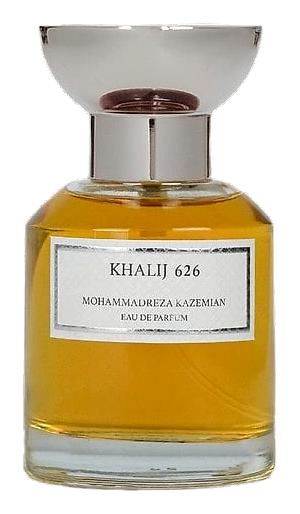
Khalij 626 was born from a specific kind of shock. Mohammadreza Kazemian was on vacation in France, heading toward the Cannes beach, when he passed a boulevard lined with palm trees. Inside a nearby store, he smelled something that stopped him: a masculine fragrance built around coconut. Until that moment, he'd never encountered a men's scent that led with that note, and it changed what he thought was possible in composition. The perfume grew from that encounter. Approaching the shoreline, the surrounding atmosphere reminded him of the southern coast of Iran, but with a freedom and beauty he associated only with imagination. Palm groves, tropical fruit, warm air, and the ease of being somewhere completely other shaped the memory he carried home.
What's unusual here is the collision of structures. Coconut in a men's-leaning composition was already a provocation when Kazemian first encountered it; building a whole fragrance around that tension takes it further. Aldehydes and neroli shape the opening, while guaiac wood, tobacco, and sandalwood give the composition a dry, mineral-leaning base. Coconut remains recognizable, but it is surrounded by materials that keep the fragrance from becoming simply tropical or sweet. The result reads as a hybrid: a composition that joins a bright opening, a warm coconut center, and a woody, smoky close.
The evolution
The opening announces itself with a bright aldehyde lift, sharp enough to cut through the first impression of warmth. Italian bergamot and neroli carry that brightness, and the scent initially reads crystalline and almost bracing. Then something unexpected. The aldehydes soften as the composition develops, allowing coconut to arrive with more body. It is fleshier than a suntan-lotion version, glossed by ylang-ylang and given lift by iris and a thread of vetiver. A tropical-fruit suggestion sweetens the air without identifying itself, more the idea of fruit than any specific one. The heart settles into a lactonic warmth that clings to skin like humidity. Smoke enters through guaiac wood and tobacco, pushing through the coconut and turning the composition from sunny toward duskier and more contemplative. Sandalwood and cedarwood underneath keep it woody rather than ashy.
Cultural impact
Khalij 626 brings coconut into a composition built around smoke, woods, tobacco, and mineral facets. That pairing gives the fragrance a distinctive place within contemporary niche perfumery. Coconut often suggests sweetness, tropical air, or creamy richness, but here it is treated as the opening point for a more complex structure. Aldehydes, neroli, and bergamot brighten it at first. Ylang-ylang, iris, and vetiver deepen the center, while guaiac wood, tobacco, sandalwood, and cedarwood make the drydown darker and more grounded. The fragrance does not rely on coconut alone.
The House
Mohammadreza KazemianMohammadreza Kazemian is a self-taught perfumer from Iran who built his eponymous house on a provocative premise: imagination shapes reality. Rather than chasing trends, the brand invites wearers into what it calls a fantasy world, where attitude and original thinking transform ordinary moments into something extraordinary. Each fragrance functions as a narrative artifact, inviting the wearer to rewrite their own story through scent.
The Creator
Mohammadreza KazemianKazemian's compositions lean toward the floral-oriental and ambery territory, with enough restraint to keep them wearable rather than decorative. He shows a clear affection for powdery hearts built on iris, for the quiet luxury of ambrette, and for woods that lend a warm, slig…