
The Story
Why it exists.
The beginning
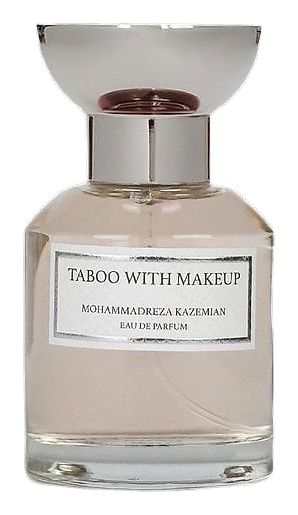
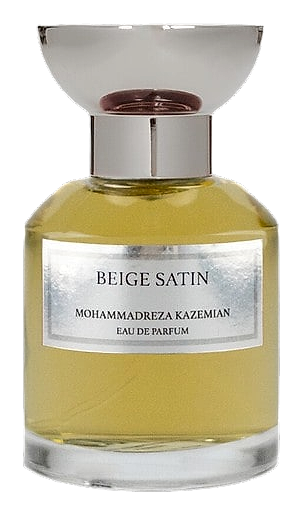
Mohammadreza Kazemian has said that satin, the fabric, drew him in before anything else: a material that is strong without hardness, soft without weakness. Beige Satin grew from that contradiction, a 2021 composition built on the tension between what yields and what holds. The beige he landed on was not a neutral. It was a precious cover, something protective that still invites touch. He framed the scent as modern for his house, a step toward the kind of atmosphere where comfort and composure refuse to separate. The naming is doing work here. Satin suggests drape, the way fabric catches light. Beige suggests a shade chosen on purpose, not defaulted to. Together they describe a fragrance that does not shout, does not fade, and never tries to be anything other than exactly what it is.
The unusual thing about this composition is how few of its notes behave as expected. Butter, which could read as gourmand, is pulled toward powder by iris and mimosa before it sweetens. Suede sits in the heart rather than the base, which means it arrives early and stays warm rather than dry. Almond does what almond does in the hands of a careful perfumer: it carries the creaminess that vanilla might have flattened. Myrrh threads through the middle like a seam of resin stitching everything else together. It is a powdery-leathery accord assembled from materials that usually live in different rooms of the perfume house.
The evolution
The opening is the softest part, which surprises people who assume suede-forward compositions announce themselves. Butter, almond, and a clean hit of mimosa arrive first, and the whole thing reads almost like warm milk on skin. There is a moment, maybe ten or fifteen minutes in, when the iris shows up and the composition tilts toward powder. That is when the suede lands. It does not feel leathery in the obvious way. It feels like the underside of something expensive, the lining of a coat, the soft inside of a glove. As hours pass, the vanilla and butter recede and the structure takes over. Amber, myrrh, and woody notes hold the shape. What remains on skin after a full day is a thin band of creamy suede with just enough sweetness to register. It does not project dramatically, but it stays, the way the right fabric stays warm when you stop moving.
Cultural impact
Beige Satin sits at a particular crossroads in independent perfumery today: a composition that uses resinous materials like myrrh, amber, and frankincense, but frames them through a lens that feels distinctly personal and quietly editorial. Kazemian is part of the niche perfume movement coming out of Iran, a region that has produced some of the more singular voices in recent perfumery, and his approach, independent, intentional, unconcerned with mass-market expectation, marks him as a creator working on his own terms. Beige Satin reads as the softer end of that ambition, a piece that earns its restraint rather than wearing it.