
The Story
Why it exists.
The beginning
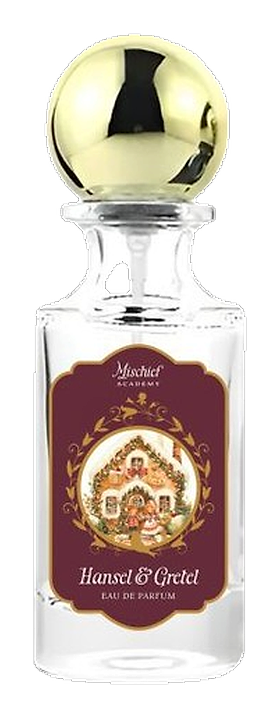
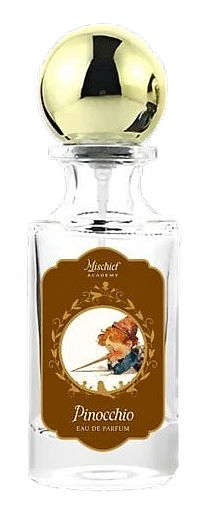
Pinocchio began as a question: what does a wooden puppet smell like when it comes to life? Anh Ngo answered with six notes, sandalwood, palo santo, cedarwood, vetiver, saffron, peach, that trace the story from carved stillness to something with a pulse. The woods are the obvious choice, the literal material of the boy's body. But it's the peach that does the real work. That soft, living sweetness that suggests circulation, warmth, the first moment of becoming real rather than merely carved. Mischief Academy built its debut collection around fairy tales that adults never quite made peace with, and Pinocchio is the olfactory translation of that particular unease, the moment in the original story when wood becomes flesh, and nothing is innocent after that.
The note structure is deceptively simple. Six materials, no obvious tricks. The brilliance is in the restraint. Three woods, sandalwood, palo santo, cedarwood, could easily become a wall of smoke and resin. Instead, they stay pale, almost translucent. Vetiver pulls the composition toward grass and earth rather than darkness. Peach doesn't announce itself as fruit; it reads more like skin, like something alive under the surface. Saffron is the thinnest thread of warmth, just enough to prevent the whole thing from reading as cold or static. The result is a fragrance that smells like the idea of wood rather than the reality of it, smooth, clean, sun-warmed, and very much in motion.
The evolution
It opens with those three woods in concert, palo santo first, dry and slightly smoky, followed by cedar and sandalwood arriving almost simultaneously. The vetiver is there from the start, a grassy undertone that keeps the woods from feeling inert. Ten minutes in, the peach begins to surface, soft and translucent, like skin just barely warmed by circulation. The sandalwood turns creamier. The composition reads as quiet, almost shy. By the second hour, the woods have settled into something more familiar, cedar-dominant, dry, the peach faded to the faintest suggestion. The drydown is what remains on skin hours later: a soft, warm wood that doesn't demand attention. Moderate sillage throughout. On paper, it lasts closer to six hours. On dry skin, it fades faster. The next morning, there's a ghost of cedar on the wrist and not much else.
Cultural impact
The independent fragrance space in 2025 has seen a quiet but persistent shift toward narrative-driven scents, fragrances that ask you to inhabit a story rather than project an image. Mischief Academy arrived with a debut collection built entirely on this premise, naming each scent after a fairy tale and letting the concept do the work that traditional perfumery might accomplish through ingredient prestige or house heritage. Pinocchio fits neatly into this approach: it's a fragrance that asks you to engage with an idea (a wooden boy, becoming real) rather than evaluate a formula. Whether that concept translates to the chemistry of the scent itself is where individual opinion diverges, and that's the conversation worth having.