
The Story
Why it exists.
The beginning
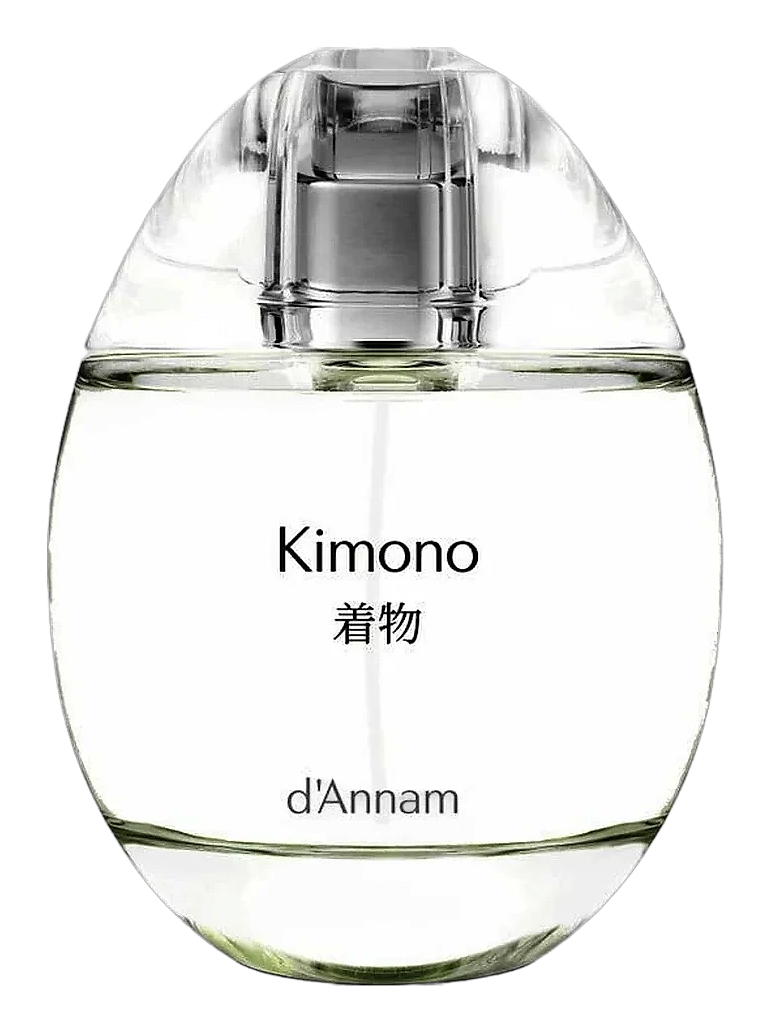
Chapter 2 of the d'Annam archive draws from personal and cultural memory, and for Kimono, that memory is Japanese. Perfumer Anh Ngo approached the brief by considering what it means to dress in Japanese tradition: the careful arrangement of silk, the weight of fabric against skin, the use of powder on the face. These are sensory experiences that exist in the space between clothing and body, and Ngo wanted to translate that into scent. The result is not a literal interpretation of Japan but rather an emotional one, built from ingredients that evoke softness, warmth, and careful presentation. The brand's Vietnamese heritage informs the approach to storytelling, treating each fragrance as autobiography, and Kimono is a chapter about the aesthetics of restraint and beauty.
The choice of powdery notes, magnolia, rice, and silk speaks to a philosophy of comfort and intimacy. These are notes that do not demand attention; they reward close contact. Flour and rice add an unexpected edible dimension, grounding the abstraction of silk and powder in something real. The combination suggests a scent meant to be discovered rather than announced, one that works best when someone is close enough to feel the warmth of skin. Pairing rationale centers on the idea of proximity: this is a fragrance for intimate settings, for occasions where distance is small and presence is felt.
The evolution
Kimono begins the moment it touches skin, with powdery notes and magnolia arriving together in a soft, immediate bloom. There is no waiting period, no top note fanfare. The rice note appears within the first minutes, lending a quiet grain-like quality that prevents the composition from feeling purely abstract. As the fragrance moves into its sustained heart phase, lipstick and silk notes become apparent, adding layers of waxy warmth and smooth texture. Flour emerges as a subtle base note, present throughout but never dominant, offering a faintly starchy quality that keeps the scent grounded in something tangible. The evolution is subtle rather than dramatic, each note finding its place within an already soft composition rather than arriving as a surprise. By the time the scent begins its long fade, magnolia has softened and powder has become more transparent, leaving only the faintest trace of warmth and silk-like smoothness.
Cultural impact
Kimono presents a sophisticated fragrance that weaves together magnolia as ceremonial florals, rice as the grain staple woven into daily life, and silk as the luxury textile. The composition translates these elements into scent form, exploring how cultural references find expression in a new medium. d'Annam's Chapter 2 explores these intersections, presenting fragrance as a lens through which cultural memory and aesthetic sensibility become something wearable and personal.