The Story
Why it exists.
The beginning
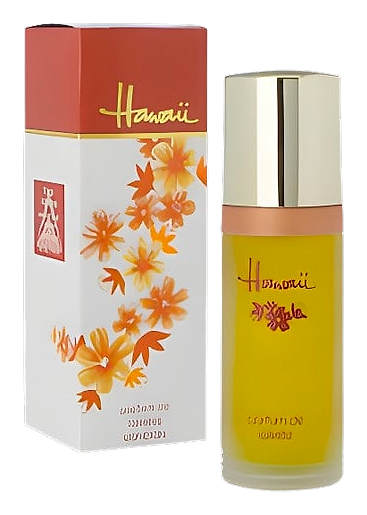
The name is the brief. Hawaii, a place where flowers don't wait for permission to bloom, where the air itself is heavy with scent. Milton Lloyd built this fragrance around that idea: a tropical garden that arrives without hesitation, led by tuberose and orange blossom. The brand's 1975 mission was simple, well-crafted fragrance without the theater, and Hawaii is that philosophy distilled. Sensuous, warm, and unapologetically floral. The kind of scent that earns its name.
The structure here is worth understanding. Tuberose is dense, almost narcotic on its own. Orange blossom opens it up, adds a citrus brightness that keeps the top from overwhelming. Then jasmine and rose build warmth in the heart, not sweetness exactly, but depth. The trick is the musk base. Without it, this would be a solar perfume, all brightness and no weight. With it, you get longevity. You get presence. You get something that settles close to the skin rather than evaporating in an hour. The combination of traditional florals, jasmine, rose, tuberose, with warm musky base notes is classic for a reason. It works. It lasts. And in Hawaii, it smells like something worth wearing.
The evolution
The opening hits fast. Orange blossom and tuberose arrive together, bright and tropical, you're in the garden within seconds. No waiting, no teasing. The jasmine and rose don't rush things, though. They arrive around the 10-minute mark, softening the tuberose's edge, adding a rounder quality. By the 20-minute mark, the musk announces itself. Not loud, it's never loud, but present. Grounding. The woody notes come last, giving the base something to stand on. Three hours in, you're in the drydown: warm, intimate, close to the skin. The florals don't disappear entirely. They linger underneath, sweet and faint. Eight hours later, you catch traces on your wrist. Not projecting anymore. Just there. Yours.
Cultural impact
Hawaii launched in 1975, positioning itself within a moment when tropical escape imagery dominated consumer culture. The name itself invoked travel and paradise, reflecting the era when Hawaii had become a bucket-list destination following its statehood in 1959. The name captures the mid-1970s fascination with Pacific islands and tropical escape, a cultural moment when Hawaii represented ultimate paradise. Milton Lloyd built its brand on democratizing designer-quality scents through direct sales and bypassing retail markups, and Hawaii became a flagship expression of this philosophy. Rather than complex layering, the brand showed that simple, elegant compositions could rival higher-priced competitors. This philosophy made white florals accessible to a mass audience.