The Story
Why it exists.
The beginning
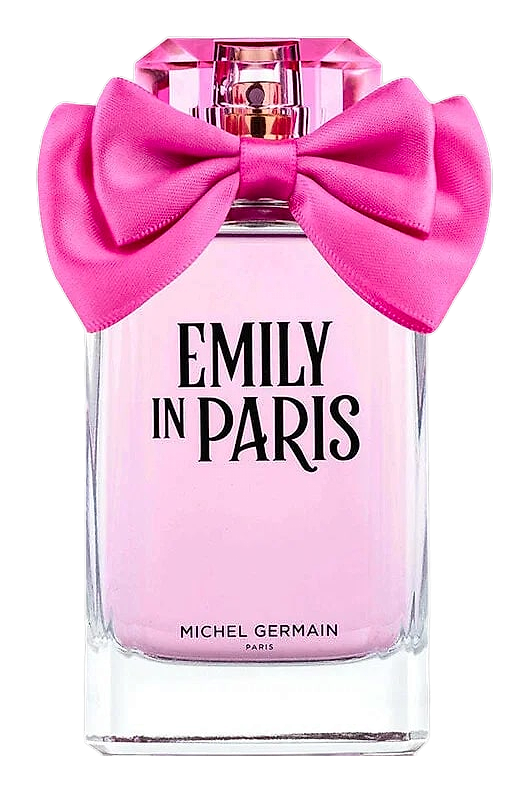
The Emily in Paris collection arrived in 2024 as a tribute to a certain kind of modern woman, one who carries Paris in her posture even when she's nowhere near it. Michel Germain built the fragrance around a specific mood: that confident, effortless chic that looks accidental but isn't. The collection name nods to the character's personality rather than a geographic location, translating her energy into something you can wear. It's perfume as character study, the essence of someone who walks into a room already knowing how it ends.
The structure plays a familiar game: fruity opening, floral heart, warm base. But the Burgundy blackcurrant in the top is the tell. It adds a tartness, a slight edge that stops the composition from becoming mere sweetness. Oakmoss in the base is a quiet nod to classic perfumery, it grounds the modern sweetness in something older, giving the fragrance a subtle complexity that rewards attention. This isn't accident. It's a composition that knows its audience wants approachable without being boring.
The evolution
The opening hits immediately with French pear and neroli, clean, bright, citrus-adjacent. The blackcurrant arrives fast, adding that characteristic tartness that lifts the sweetness off the skin. Within 20 minutes, jasmine and rose take over the heart, but they don't dominate. They soften. The composition moves from fruity to floral without ever fully leaving the fruit behind. By the second hour, amber and musk warm everything up. The oakmoss adds a green, slightly earthy quality that prevents the base from becoming generic. Three to four hours in, what's left is a soft, close skin scent, intimate, not loud, the kind of presence that someone leaning in would notice.
Cultural impact
The Emily in Paris fragrance arrives at a moment when approachable luxury has become its own category. Rather than chasing complexity or niche credibility, it stakes out territory in modern, wearable femininity, sweet enough to please, sharp enough to stand out. Community response has been mixed but engaged: some wearers find it refreshingly direct, while others note its synthetic character. The 2024 launch places it in a crowded market of similar fragrances, but its connection to a specific cultural moment, the character, the aesthetic, the idea of Paris as a state of mind, gives it a narrative hook that generic fruity-florals lack.