The Story
Why it exists.
The beginning
Jean-Francois Laporte launched Eau de Mure in 1988 as part of Les Symphonies Legeres, a collection built around sensory memory, holidays, countryside, hedgerows heavy with fruit. Laporte had spent the 1970s reshaping what French niche perfumery could do at L'Artisan Parfumeur. By 1988, he had the freedom to pursue more specific ideas. The brief here: blackberry, but not jam. A berry scent that refused to be sweet. The name means blackberry water, though the fragrance itself fights that expectation at every turn. Bergamot and African orange flower open bright and clean, while blackcurrant and mastic give the fruit a tart, almost herbal edge. It's the celery, uncommon in mainstream perfumery, that earns the composition its character. Laporte built a fruity fragrance for someone who doesn't want to smell like everyone else.
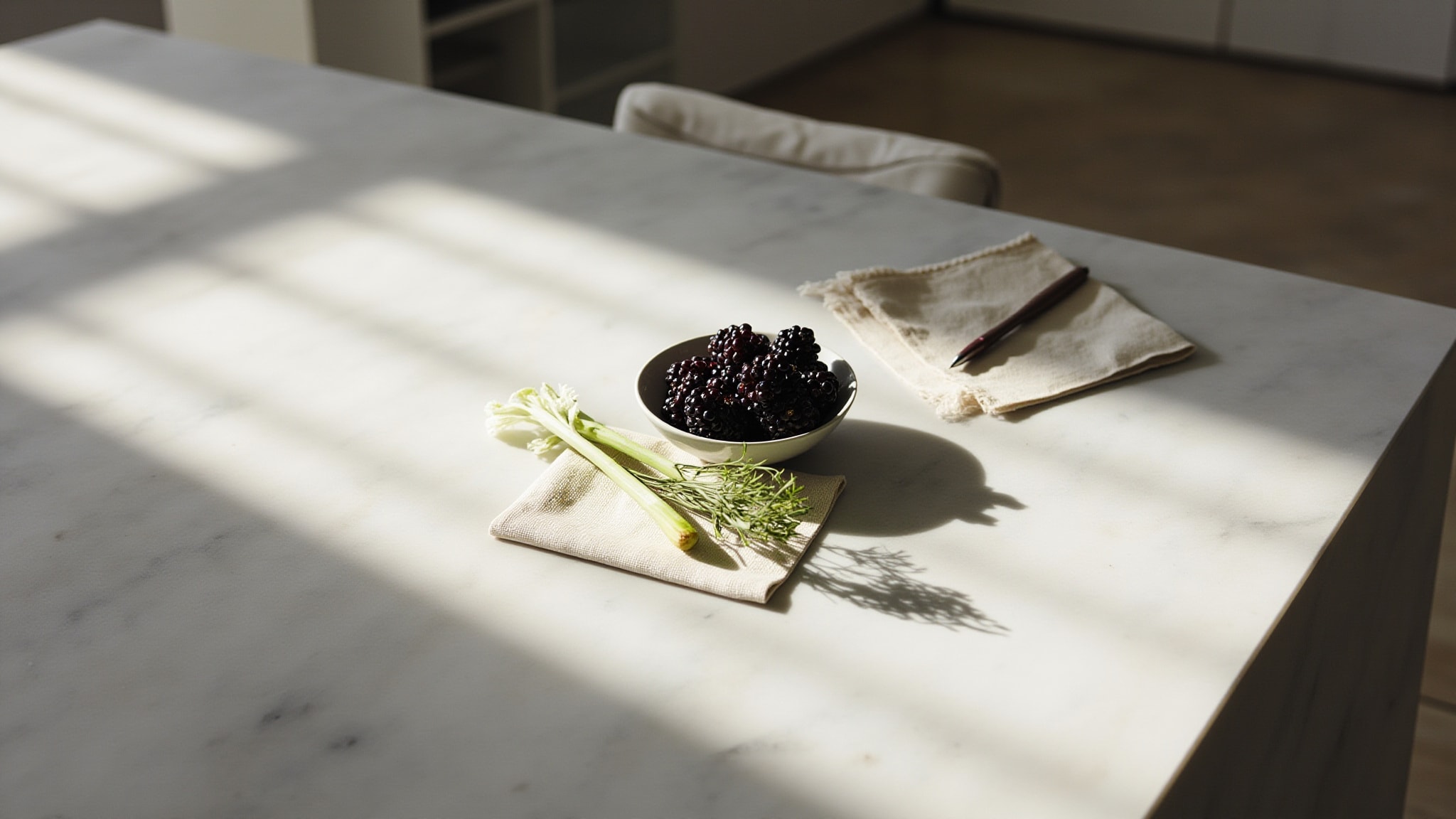
The celery is the tell. Not celery seed or celery salt, the actual green vegetable note, lending a stem-snapped bitterness that cuts through the blackcurrant. Mastic resin adds a resinous, slightly piney quality that grounds the fruit, preventing it from floating into the abstract. Together, these materials create a tartness that most contemporary berry fragrances avoid entirely, favoring accessibility and sweetness instead. The clove in the heart is subtle, a warmth that sneaks in rather than announces itself. This is an unusual composition for 1988, when fruity florals trended toward powdery innocence.
The evolution
The opening hits bright and clean, bergamot and orange flower doing the expected work before the berries arrive. Twenty minutes in, blackcurrant takes over. But here it doesn't smell like candy or lotion. The celery note appears almost immediately, cutting through the fruit like a green knife. It's jarring if you're unprepared. The mastic keeps things resinous, slightly bitter, while clove adds a faint warmth underneath. By the second hour, the fruit has settled and the powdery base emerges, tonka bean, sandalwood, amber. The transition isn't dramatic. It's more like watching fog roll in. The drydown becomes intimate, close to the skin, with the blackcurrant never quite disappearing, lingering as a tart memory rather than a bold statement. On fabric, the tonka and sandalwood hold for 4-6 hours. On skin, closer to four before the powder fades to a quiet warmth.
Cultural impact
Eau de Mure sits apart from the powdery florals and sweet orientals that defined 1988. Its tart, green, and bitter character made it unusual at launch and continues to divide opinion today. The composition attracted wearers who wanted something different from the mainstream fruity releases of its era, berry that refused to sweeten, fragrance that refused to apologize.