
The Story
Why it exists.
The beginning
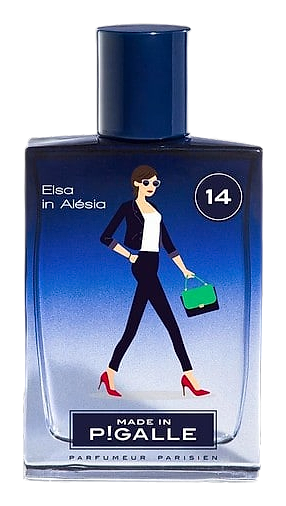
Elsa calls her neighborhood un petit village, the kind of self-aware diminutive only a Parisian would offer. She's the sort of woman who runs to the flower shop before dinner at a friend's apartment, who carries peonies home like they're the most natural errand in the world. The brand's own note imagines her between concerts and museum visits, stealing quiet hours for flowers and fruit. She gathers watermelon from the Provençal countryside and folds it into a Paris afternoon, a Provençal picnic smuggled into a city errand. The fragrance itself is built around peony, freesia, watermelon, jasmine, iris, rose, white musk, and ambergris, three floral acts and a whisper of musk, a quiet neighborhood rendered in scent.
Elsa in Alésia stays in a pale, sunlit register, built around a peony-freesia-watermelon opening that reads almost like a cool drink on a warm afternoon. The watermelon is the unexpected move, a fruity note that usually announces itself loudly but here stays restrained, adding transparency to the floral heart rather than sweetness for its own sake. Egyptian jasmine and iris anchor the middle, giving the peony some backbone without tipping into the indolic territory jasmine can occupy.
The evolution
The first spray is a green, mineral freshness, that cut of watermelon and freesia packed with clarity. Peony sits underneath already claiming its territory, soft and powdery from the start. Within the first quarter hour the watermelon thins out, the freesia recedes, and the peony unfurls fully into that slightly soapy register it does best. The rose and jasmine in the heart are polite guests, rounding out the bouquet without competing, and the iris adds a cool, suede-like depth that keeps the whole thing from reading too girlish. As the hours pass the florals settle into something quieter and more unified, a softer hush where the individual stems become harder to pick apart. The white musk and ambergris in the base take over the last act, and the musk proves genuinely persistent.
Cultural impact
Elsa in Alésia is part of the lineup that established the house's now-signature conceit of naming each fragrance after an imaginary resident and their quartier, a fictional map of Paris built one address at a time. Within that group, this one leans furthest into delicate, pale florals rather than darker or more gourmand territory, making it a reference point for the brand's softer side. It's the peony fragrance of the roster, the one that performs closer to skin than to spectacle, the kind of composition chosen by someone who already has a signature and isn't trying to project across a room.