
The Story
Why it exists.
The beginning
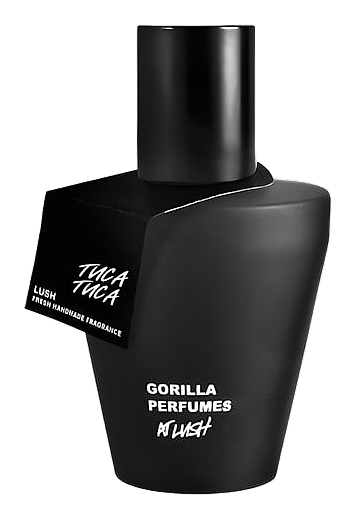
Tuca Tuca arrived in 2010 as part of Lush's Gorilla Perfume launch. The fragrance opens with the actual green of the violet plant, not the powdered violet of your grandmother's vanity but the cut, slightly bitter stem and leaf that snaps when you break it. This initial sharpness gives way to something more complex, where the bright, green quality lingers like morning dew on grass. The composition manages to be sweet without becoming saccharine, sensual without becoming heavy. There's an inherent humor in the way the scent moves, a playfulness that refuses to take itself too seriously even as it reveals deeper layers. The fragrance holds together across its wear, the green note and floral warmth dancing around each other rather than competing for dominance.
What makes Tuca Tuca structurally interesting is the repeated violet note, it appears in both the top and base of the pyramid, creating a through-line that most fragrances lack. The top violet is fresh and ozonic, the base violet leaf is darker, greener, almost resinous. Ylang-ylang does the heavy lifting in the heart, its sweet-spicy floralcy bridging the gap between the crisp opening and the woody close. Vanilla doesn't arrive all at once, it builds quietly beneath the ylang-ylang, adding warmth without sweetness for sweetness's sake.
The evolution
The opening hits within seconds, bright, green, immediately identifiable as violet leaf. There's a mineral quality to it, like the stem just cut. Blackcurrant and mimosa are there too, but they're secondary, adding a faint fruity shimmer around the edges without competing for attention. Within twenty minutes, ylang-ylang takes over. The fragrance flips from crisp to creamy, the way afternoon sun changes the feel of a garden. Vanilla arrives gradually, slipping under the ylang-ylang rather than overwhelming it. This middle phase is where most people fall in love with Tuca Tuca, it's warm, floral, and unexpectedly intimate. The drydown is where violet leaf reasserts itself, but different now. Darker. More grounded. Vetiver and sandalwood carry the base, with violet leaf adding a green, slightly animalic undertone that some wearers describe as the fragrance's true character emerging.
Cultural impact
Tuca Tuca occupies an unusual position in the Lush lineup: discontinued but still sought after. The violet-and-vanilla combination drew a specific type of wearer, someone who wanted floral warmth but didn't want to smell like every other floral on the market. Its projection and the green undertone gave it enough edge to feel personal rather than generic. Those who remember it speak of how it balanced innocence and seduction in a way that felt effortless, a quality that's difficult to achieve and impossible to replicate exactly.