
The Story
Why it exists.
The beginning
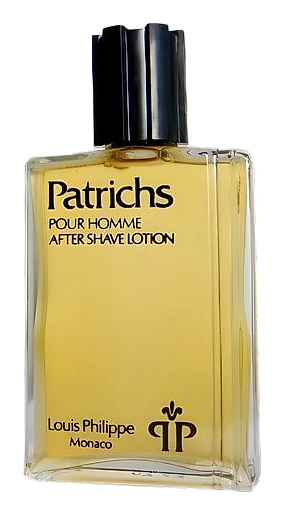
Patrichs Pour Homme arrived in 1976 from Louis Philippe Monaco. The house itself keeps a low profile, and what remains is largely the cologne and what it leaves behind on those who wear it. One fragrance in the major databases was a thin claim; the Parfumo page actually lists several Louis Philippe Monaco entries, including Otelo, L.Philippe pour Homme, the Cora line (Kiss, Moon, Sun), the Clyo entries (Rouge, Clyo), Darling, Revival, and Béret. None of those names carry the same weight as the material at hand. What's left is Patrichs itself, a men's scent cut from the fabric of the mid-seventies: cedar runs through the composition like a spine, the spicy notes give it a low hum, oakmoss pulls the whole thing earthward, and amber warms the floor.
There's a specific logic to how this composition is stacked, even without a traditional pyramid on paper. Cedar arrives as a kind of vertical support, clean and slightly resinous, the note that holds the rest of the structure in place. The spicy notes give the composition a low hum, a warmth that runs underneath everything else without ever pushing to the foreground. Oakmoss brings the mossy, earthy depth that gives the cologne its footing, a note that grounds the lighter material above it and keeps the whole thing from drifting.
The evolution
On skin, the first few minutes bring the spicy notes forward, that low warmth announcing itself almost immediately, the kind of presence that registers without announcing. As the minutes pass, the cedar begins to register more clearly, clean and slightly resinous, threading through the warmth above it. Oakmoss settles in underneath, the mossy-earthy quality emerging as the spice softens its grip. The middle stretch belongs to cedar and oakmoss working in tandem, the woods carrying the composition while the spicy warmth fades into the background. By the later hours the amber has settled in, warm and quiet, the kind of presence that doesn't compete with the room but rewards anyone close enough to notice. The arc moves from a spicy opening through a woodsy middle and into an amber close, each phase handing off to the next without a hard break.
Cultural impact
Patrichs sits in a particular register of masculine fragrance, the woody-mossy territory that 1976 compositions like this one occupied. Cedar, oakmoss, amber, and a layer of spice make up the working palette, and that combination places it in a recognizable family of men's colognes from the period. The composition wears its age as part of its character, and wearers tend to come to it through vintage channels and collector circles rather than current counters.