Heritage
A house, in its own words
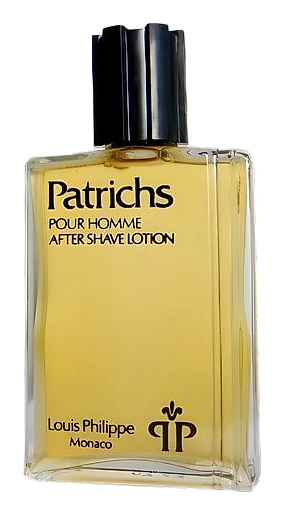
The documented history of Louis Philippe Monaco is remarkably thin, a single fragrance listed in major perfume encyclopedias and very little else in the public record. The only fragrance attributed to the brand in fragrance database Fragrantica is Patrichs Pour Homme, released in 1976. Another database, Maison KV, references a catalog of 14 scents under the Louis Philippe Monaco name, suggesting a broader range of releases than what major international databases capture, though details on these additional fragrances remain limited. The brand name itself carries associations with Monaco, the sovereign city-state on the Mediterranean coast known for its concentration of luxury brands and fragrance houses with European heritage. However, no verifiable founding date, founder name, or company origin has been confirmed through independent sources. The 1976 release date of Patrichs Pour Homme places the brand's known activity in the mid-1970s, a period when men's fragrance was dominated by bolder, spicier compositions aimed at a growing market of department store and specialty retailers. Unlike legacy French perfume houses such as Houbigant (operating since 1775) or Lubin, which secured the title of Official Perfumer to the French Royal Court in 1830, Louis Philippe Monaco has no documented royal warrants, no multi-century lineage, and no recorded presence in the archives of historic perfumery. The brand's absence from mainstream industry histories makes it a genuine curiosity in the vintage fragrance collector community, where Patrichs Pour Homme occasionally surfaces in discussions about obscure 1970s men's scents. Because Louis Philippe Monaco has virtually no public-facing documentation, no founder interviews, and no brand manifestos, the house's creative philosophy must be inferred from the single fragrance it has made publicly known. Patrichs Pour Homme, released in 1976, opens with what reviewers describe as a spicy-sweet, slightly powdery character, suggesting an approach rooted in the masculine fragrance conventions of the mid-1970s: warmth, sweetness tempered by spice, and a soft textural quality from powdery accords. The 1970s men's fragrance landscape was characterized by bold statements, and a spicy-sweet profile aligns with the era's taste for compositions that balanced Oriental richness with approachable wearability. Without access to brand statements or interviews, it is impossible to confirm whether Louis Philippe Monaco operated under a specific creative doctrine. What can be said is that the brand chose to enter the men's fragrance category at a specific cultural moment, producing a composition whose character reflects the perfumery priorities of its time. The brand's near-total absence from contemporary fragrance media raises the question of whether Louis Philippe Monaco was a short-lived venture, a subsidiary label, or a house that simply never achieved widespread distribution. In the absence of verifiable information, any claim about a guiding philosophy would be speculation. The fragrance itself, as the only tangible artifact, remains the most honest expression of whatever intent the brand's creators held.