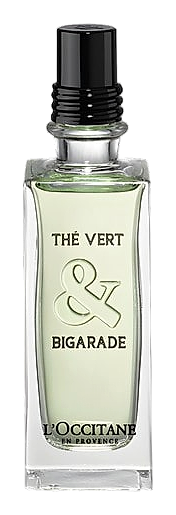

The Story
Why it exists.
The beginning
The name says everything. Vert is the green of the botanicals, green tea, mate, thyme. Bigarade is the bitter orange, a citrus that trades the happy shine of sweet orange for something more complex, more astringent. Karine Dubreuil-Sereni built this fragrance around that tension: bright, sharp, undeniably green, but never naive. It was part of the Collection de Grasse, a lineup that highlighted L'Occitane's botanical heritage. The composition opens with a tart, piercing citrus that demands attention, then softens into herbal territory where mate and thyme create layers of green complexity. It's a fragrance that earns attention through contrast rather than volume, the kind of scent that reveals more the longer you wear it.
What makes The Vert & Bigarade interesting isn't the green tea, that's become a fragrance staple. It's the mate. Yerba mate is the leaf that many drink as a social ritual. Combined with thyme, mate gives this fragrance an herbal complexity. The hay in the base reinforces that field note, that sense of landscape. It's a composed herbalism, organized but not sterile. The fragrance moves from its sharp citrus opening through a textured heart where the herbal notes blend seamlessly, never competing for dominance.
The evolution
The opening hits bright and tart, bitter orange leading, green tea following close behind. For the first minutes, it's sharp, almost astringent, like biting into an orange segment where the pith is still attached. Then the mate arrives. Thyme joins. The herbal heart unfolds, taking the sharp edge and replacing it with something more textured. The hay starts to emerge from the base. Cedar follows. Musk settles in the background. The fragrance becomes a soft woody-green haze, lingering close to the skin. The scent evolves from tart citrus through herbal complexity to a quiet, grounded drydown where each note has its moment without overwhelming the others.
Cultural impact
The Vert & Bigarade stands apart in the green fragrance category. The mate and thyme give it a herbal complexity that rewards attention. The fragrance reads as considered rather than loud, a botanical composition that speaks through subtlety and depth. It's the kind of scent that invites conversation not because it announces itself, but because it rewards those who lean in close enough to discover what it's really about.