The Story
Why it exists.
The beginning
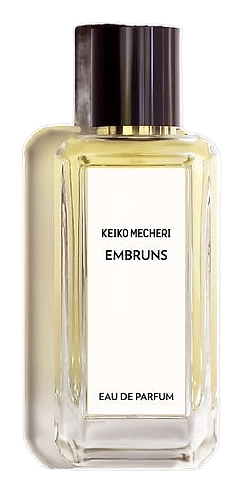
Keiko Mecheri designed Embruns around a memory of her native Japan: an early morning walk along a coastline, fog rolling in from the water, the smell of salt air tangled together. The name suggests a concept, that moment between night and day when the world hasn't quite decided what it wants to be. Released in 2014, Embruns arrives with a Japanese hinoki cypress anchoring a Chypre framework more commonly associated with French perfumery. The composition uses this cypress as a defining element, its slightly medicinal, forest-fresh quality threading through the structure rather than simply sitting on top. The result feels carefully composed, with each layer built to support the others. There's a quiet confidence in how it holds together that makes repeated wearings reveal something new.
What makes Embruns structurally interesting is how it builds a marine quality through hinoki needle, the essential oil of Japanese cypress, which carries its own slightly medicinal, forest-fresh quality. Combined with other aromatic materials, it creates a coastal feeling that reads as botanical rather than synthetic. The Chypre architecture, citrus opening, rich heart, mossy-patchouli base, is traditional, but the ingredient choices push it somewhere more specific. Indonesian patchouli and frankincense in the base give resinous weight without sweetness.
The evolution
Bergamot arrives first, bright, citrus-sharp, almost bitter in the way the zest of a lemon is bitter. Within minutes, marine qualities emerge alongside it. Not the sunscreen-aquatic of mass-market fragrances but something mineral and cool, like wet stone at the tide line. The hinoki appears mid-development, adding a cedar-like dryness that cuts through the salt. It's the hand-off moment, salt backing down, wood stepping forward. The heart develops with time, incense and moss layering in to create something that reads as both forest-floor and temple-corner. The patchouli doesn't arrive dramatically, it accumulates, adding earthiness underneath everything. As the top notes fade, the drydown reveals frankincense, white sandalwood, and the lingering presence of hinoki. On fabric, it can last into the next day as a quiet woody-resinous trace.
Cultural impact
Embruns occupies an interesting position in the marine fragrance category, offering a more sophisticated alternative through botanical materials that read as coastal without smelling like sunscreen. The hinoki note gives it an aromatic, forest-like quality that separates it from both typical marine fragrances and pure woody compositions. It appeals to someone who wants a fragrance with depth and complexity, something that reveals different facets over time rather than delivering everything at once. The blend of cypress and traditional Chypre elements creates a scent that feels both grounded and atmospheric.