
The Story
Why it exists.
The beginning
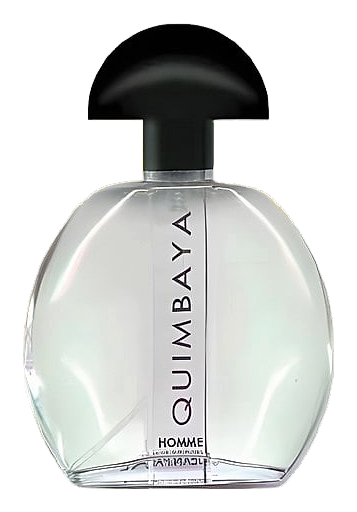
Quimbaya pour Homme arrived in 2002 as Jean Pascal's answer to a question the brand had been sitting on. The fragrance launched as part of a dual release, with Quimbaya pour Femme offered alongside it, the two compositions standing together as a paired statement from the same creative moment. The name itself does the cultural heavy lifting. Quimbaya refers to the indigenous people of Colombia, known for centuries for their goldwork and terracotta ceramics. Naming a fragrance after that heritage signals an identity rooted in something older and more particular than the usual European reference points, and the masculine expression of that idea is what Quimbaya pour Homme sets out to deliver.
What makes this composition interesting is how it organizes its materials. Lavender leads, which is the canonical fougère choice, but the supporting cast goes its own way: violet for a powdery coolness that French fougères tend to avoid, frankincense and sandalwood from the deeper end of the aromatic spectrum, and clove plus thyme threading warmth through the spine. The result is a fougère that doesn't want to be confused with a clean-shaven barbershop scent.
The evolution
The first thirty minutes read cool and lifted: lavender dominates, supported by the citrus opening that gives the whole thing lift. It's sharp in a clean way, the sort of opening that announces itself from across a desk. Around the forty-five-minute mark, the herbal layer settles in. Rosemary and thyme arrive with green weight, the clove beginning to warm underneath. This is where the fragrance stops being a simple fougère and starts smelling like something more composed. The violet shows up about an hour in, dusting the whole arrangement with a soft, powdery softness that keeps the spice from getting aggressive. The drydown is where the base materials earn their keep. Frankincense arrives late but quietly, adding a smoky, almost church-like depth, while sandalwood provides the warm wood underneath everything. As the hours pass, the composition relaxes into its slower rhythms.
Cultural impact
Quimbaya pour Homme took its name from the Quimbaya people, an indigenous group of Colombia known for centuries for their goldwork and ceramics. That reference is not decorative; it anchors the fragrance in a specific cultural and geographic tradition, and it does so at a time when most of the perfume world's reference points still default to French, Italian, and occasionally British houses.