The Story
Why it exists.
The beginning
Jardin de France is a quiet French house with a garden heritage, and Feu Primitif arrived in 2018 as something of a departure, a spark instead of a petal. Perfumer Justine Baligand-Brivet had a specific idea: the bright, sparkling moment when fire first catches. She reached for Timut pepper, a Himalayan variety known for its fresh, almost grapefruit-like citrus edge, to anchor that initial burst. The name itself, Feu Primitif, points to something primal, elemental. A first fire. The kind humans made before they had language for it.
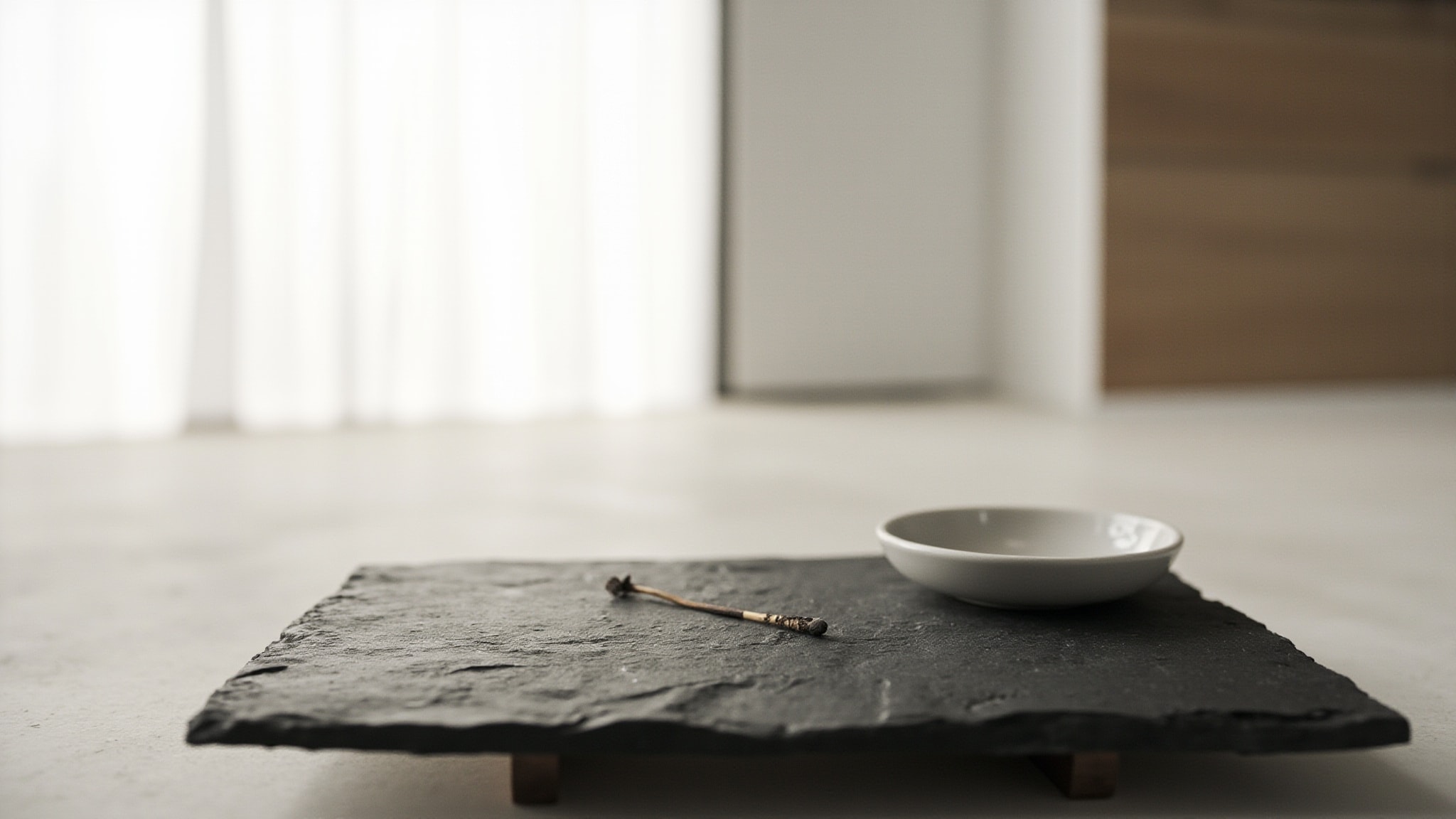
What makes this composition unusual is how Baligand-Brivet treats the incense. Rather than leaning into its sacred, temple associations, the route most perfumers take, she deliberately breaks that code. The frankincense here doesn't smell ecclesiastical. It smells like smoke after the fire has settled, intimate rather than ceremonial. The black tea and rose heart reinforces this: tea is contemplative, rose is soft, and together they create a cool counterpoint to the spicy opening. It's the compositional equivalent of building a fire in a garden rather than a church.
The evolution
The opening arrives fast, elemi resin and Sichuan pepper hit bright, almost startling. Orange zest cuts through with a clean sharpness. Within fifteen minutes, the pepper softens into something more rounded as the black tea emerges, cool and slightly astringent. The rose doesn't announce itself; it lingers at the edges, a quiet presence rather than a statement. By the second hour, the incense has taken over. Cypress smoke, cedar warmth, this is where the fire settles into embers. On fabric, it can last into the next day, a faint trace that smells like a room someone just left.
Cultural impact
Feu Primitif arrived during perfumery's renewed interest in primitive, elemental materials, a counter-trend to hyper-realistic genre fragrances. By stripping incense of its sacred connotations and pairing it with the bright, almost clinical sparkle of Sichuan pepper and elemi, perfumer Justine Baligand-Brivet positioned the scent at a crossroads between ritual and modernity. The 2018 release coincided with a broader cultural moment where consumers sought scents that felt authentic rather than constructed, raw rather than polished. This fragrance found its audience among collectors who appreciated the tension between the perfume's accessible citrus opening and its contemplative smoky drydown, embodying a kind of spiritual minimalism that felt right for its era.